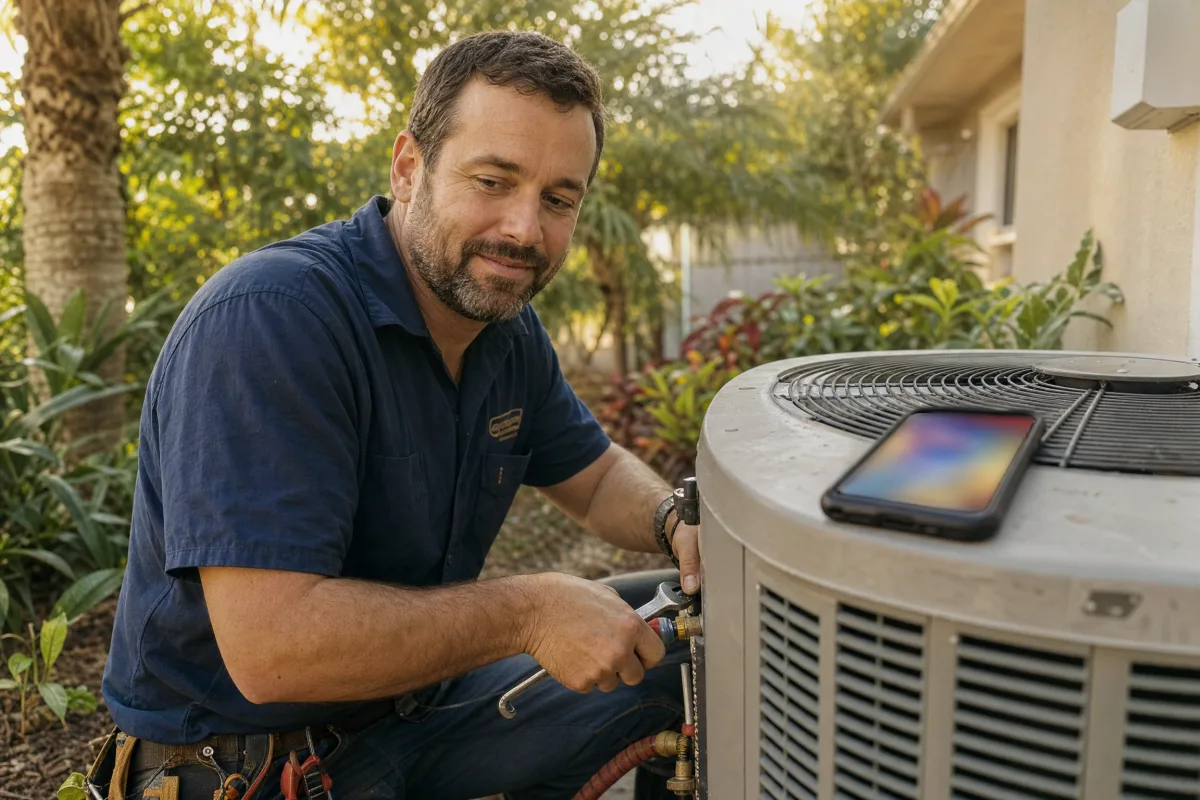
Most service businesses lose work the same quiet way. A good lead comes in while you’re on a job. You mean to call back tonight. By tonight, they’ve already booked someone who got back to them first. That’s the follow-up gap, and it isn’t a discipline problem — it’s a time problem no busy owner can out-hustle by hand. Follow-up automation closes it: the moment someone reaches out, they hear back automatically; if you miss their call, a text goes out; and they keep hearing from you until they book — without you having to remember. Here’s how it works, and where it actually pays.
The follow-up gap is where the jobs leak
A lead doesn’t go cold because your work is bad. It goes cold in the hour between “they reached out” and “you finally got a free minute.” A warm lead is shopping. They messaged you and probably two competitors, and they’re sitting there with their phone deciding. Whoever answers first — and keeps the thread alive — usually gets the job.
By hand, that’s a fight you can’t win on a busy day. You’re under a truck, on a roof, or finishing someone else’s kitchen. The lead gets answered once, late, or not at all. Not because you don’t care — because you have two hands and a full schedule. The gap is structural, and the only thing that reliably closes it is a system that responds whether or not you’re free.
Picture the same lead two ways. Without a system: she fills out your form at 9AM, you see it at 6PM between jobs, you call back — and she’s already hired the company that texted her at 9:01AM. With one: she gets a reply in seconds, a friendly text from you that afternoon, and a nudge the next morning, and she’s on your schedule. Same lead, same you, same quality of work. The only difference is who answered while you were busy.
Answer the second they raise their hand
The first piece of follow-up automation is the simplest: an instant reply. Someone fills out your form, sends a text, or messages your page, and within seconds they get a real acknowledgment — “Got it, thanks. I’ll have an answer for you shortly.” It costs you nothing and it does two things: it buys you time, and it tells the lead you’re on it while your competitor’s form is still sitting in an inbox nobody’s watching.
The channel matters here. Make that reply a text. EZTexting’s 2025 report puts the open rate on a text around 98%, and most get read within minutes — about 82% within five minutes, per eMarketer. Compare that to email, where the average open rate sits around 20–28% and a message can sit unread for hours. An automated text reaches your lead while they’re still holding the phone. An email hopes they check it later.

“Isn’t texting customers pushy?”
It’s the first thing owners ask, and the data says the opposite. 91% of consumers say they want to receive text messages from businesses (G2, 2025), and 79% say they’re more likely to buy when they’re subscribed to a business’s texts (Yahoo Finance’s 2025 consumer texting report). People would rather get a quick, useful text than play phone tag or wait on hold.
The trick is to keep it human. Automated doesn’t mean spammy. One real, helpful message at the right moment — “Happy to take a look, what’s the address?” — reads like good service, not a blast. The automation handles the timing and the speed; the words still sound like you.
Catch the call you couldn’t pick up
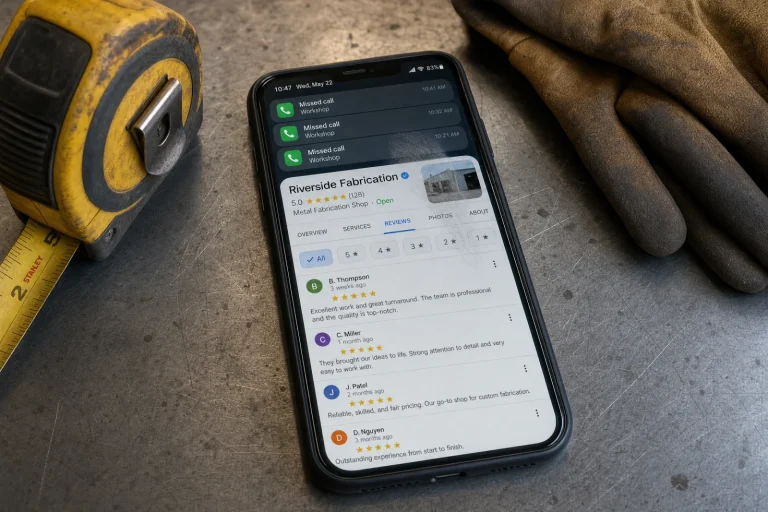
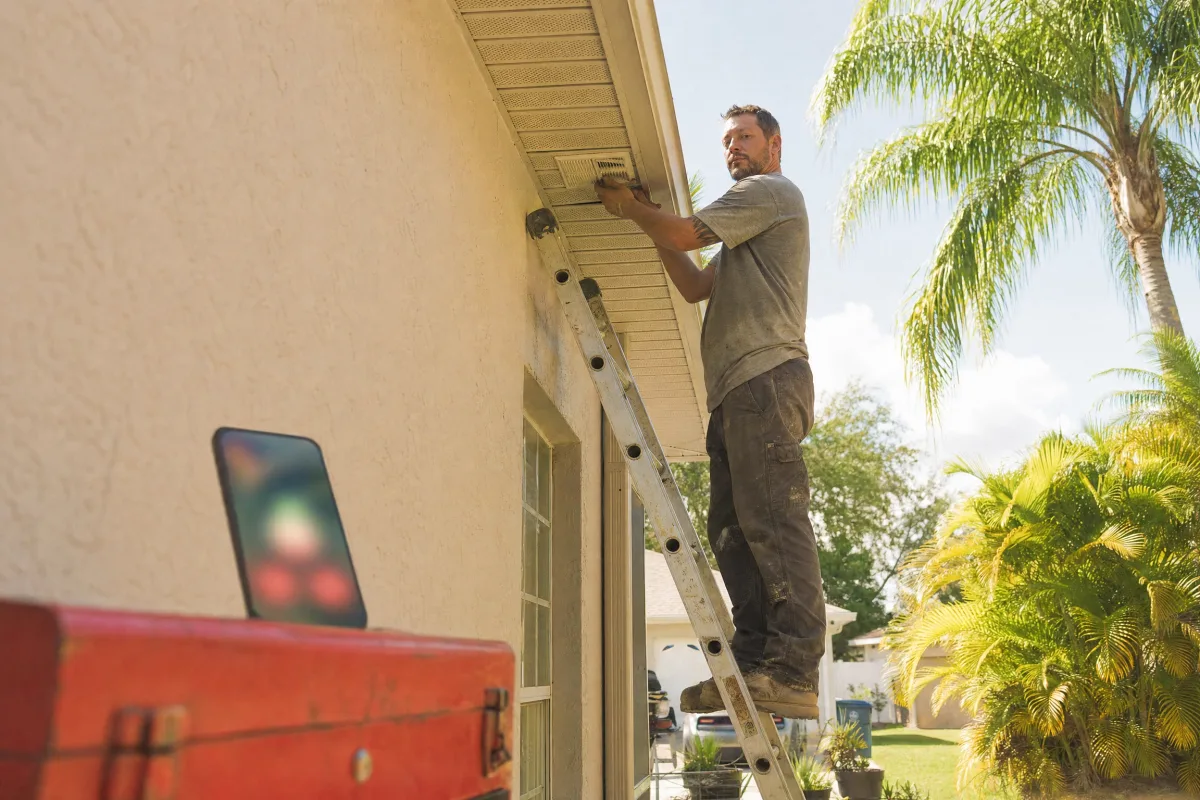
Here’s the one that quietly costs the most: the call you physically can’t answer. You’re up a ladder or talking to the customer in front of you, the phone rings, and you let it go. By hand, that’s usually a lost job — most people won’t leave a voicemail, they’ll scroll down and call the next name on the list.
Missed-call text-back fixes that without you lifting a finger. The second a call goes unanswered, an automatic text goes out: “Sorry we missed you — how can we help?” Now the lead is in a text conversation with you instead of dialing your competitor. You’ve turned a missed call from a dead end into a live lead you can answer when you’re off the ladder.
Keep following up until they actually decide
One reply rarely closes a job. People get busy, they compare quotes, they mean to get back to you and forget. The leads you “lost” often weren’t lost — they’d gone quiet, and nobody followed up.
A light automated sequence handles that part. A friendly check-in the next day. A short answer to the question everyone asks. A gentle nudge a few days later if you still haven’t heard back. It runs in the background and stops the moment they reply or book, so nobody gets pestered. You’re not setting reminders or keeping a list in your head — the system stays in front of the lead so you don’t have to.
It frees your time — it doesn’t replace you
Let me be clear about what this is and isn’t, because the hype around automation gets this backwards. This is not a robot pretending to be you, and it’s not meant to replace the call where you actually talk to the customer and earn the job. It’s the layer underneath that — the part that catches every lead, answers instantly, and keeps the thread warm until you can do the human part.
The automation does the remembering and the speed. You do the relationship and the work. That’s the entire point of automating the busywork: you stop losing leads to the follow-up gap and you get your evenings back, because the system is handling the part that used to live in your head. It works for you while you’re on the job — it doesn’t take your place with the customer.
How we set up follow-up automation at Blue Coast
I’ll be straight about how we approach this. We wire the three pieces — the instant reply, the missed-call text-back, and the follow-up sequence — into one system tied to wherever your leads actually come in: your site, your phone, your Google profile, your messages. You don’t manage it or babysit it. It runs.
That’s the heart of our Business Autopilot setup, built from the same pieces as our follow-up workflows and missed-call text-back. It pairs with a website that’s built to capture the lead in the first place — the site gets the hand raised, and follow-up automation makes sure that hand never goes unshaken.
How to start
You don’t need to overhaul anything to fix this. Start by finding out where you’re actually leaking leads — for most service businesses, the follow-up gap is near the top.
Take the 60-second Automation Scorecard. A handful of quick questions, and you’ll see your biggest bottleneck and the two fixes worth making first. No sales call at the end — and if it points at follow-up, you’ll know exactly what to shore up before you lose the next good lead to someone who simply answered faster.