Answer engine optimization is the problem this guide helps a business owner diagnose before making the wrong next move.
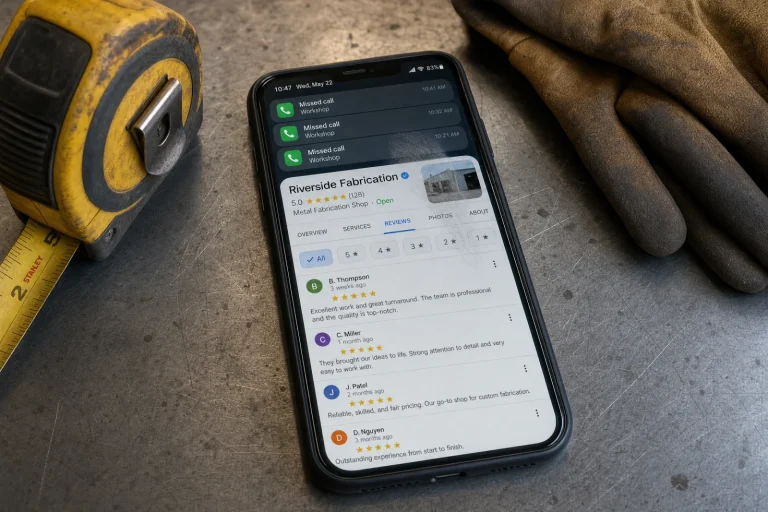
A plumbing company in Tampa called us last fall because they had noticed something strange. Their website was ranking fine on Google — position three for “emergency plumber Tampa” — but when the owner searched ChatGPT for the same thing, a competitor showed up in the answer. Not them. The competitor who showed up was not even on the first page of Google.
We pulled the numbers. The competitor was getting about forty percent more emergency calls than our client, even though our client had better reviews, a faster site, and higher traditional search rankings. The difference was answer engine optimization. When someone asked an AI where to find a plumber, the AI cited the competitor by name and included a reason to call them. Our client was invisible.
That gap is what answer engine optimization fixes. AI tools like ChatGPT, Perplexity, and Google’s AI Overviews do not rank websites the way Google used to. They cite sources the way a person would recommend a business to a friend. If your company is not showing up in those citations, you are losing jobs to businesses that figured this out six months ago.
In our world — HVAC, plumbing, electrical, cleaning — visitors referred by AI tools often convert at higher rates than traditional Google traffic. AI traffic may make up a smaller percentage of sessions but can generate a disproportionate amount of qualified pipeline. The handful of people who find you through an AI answer are far more likely to book than the dozens who click a blue link on Google.
The Tampa plumber is not an outlier. We have watched this pattern repeat with roofers, electricians, and HVAC shops all over the country. One business gets cited by AI, the other does not, and the one that gets cited closes more jobs even when their Google ranking is worse. When an AI recommends you, it has already done the vetting.
The One Thing Google AI Overviews and ChatGPT Actually Want From You
Most service businesses think answer engines work like old-school SEO. Stuff the right keywords into your page, get some backlinks, and wait for the algorithm to notice you. That is not how this works.
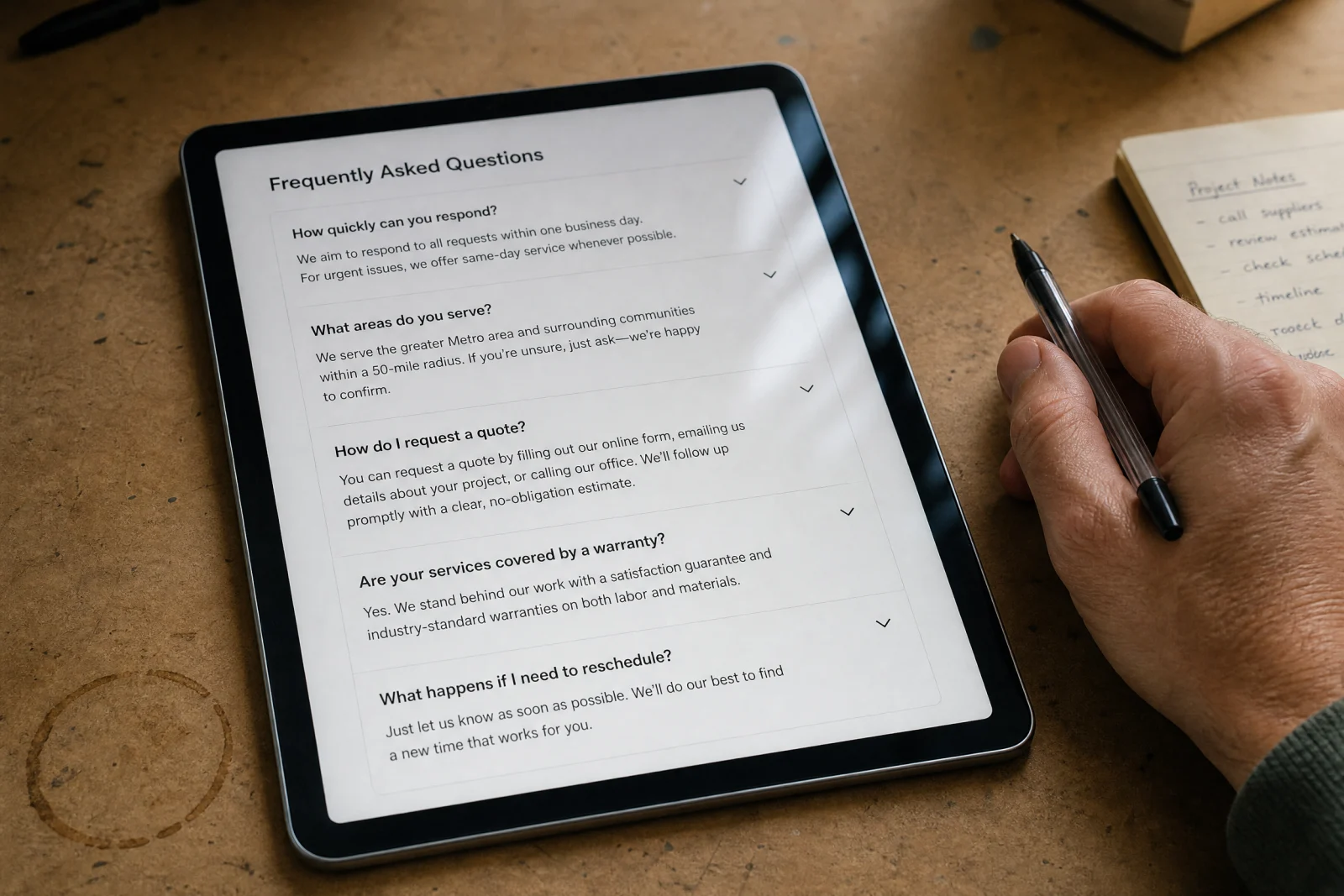
Answer engines are looking for cited authority, not keyword density. They want content that sounds like a knowledgeable person explaining something to someone who asked a real question. Marketing copy does not get cited. Product catalogs do not get cited. A page that reads like a human answering a question in plain language gets cited.
We have rebuilt dozens of service pages over the past year, and the ones that show up in AI answers all have the same quality. They use conversational Q&A format. They answer the specific question someone would actually ask, like “How much does it cost to replace an AC compressor in Florida?” or “What should I do if my water heater is leaking?” And they answer it the way you would answer a neighbor, not the way a brochure would.
AI tools are trained on billions of conversations. They skip over content that sounds like it was written to rank. They pick up content that sounds like it was written to help. If your service page reads like an ad, it will not get cited. If it reads like advice, it will.
How We Actually Got Our First Service Page Into AI Citations
The first time we tried this, we failed. We took an HVAC client’s “AC Repair” page and rewrote it with what we thought were better answers. We added FAQs, tightened the copy, made it sound more helpful. Then we waited. Nothing happened. ChatGPT still cited two other companies when someone asked about AC repair in that city.

The problem was that we were still writing for Google, not for a conversation. The page answered questions, but it answered them the way a landing page answers questions — short, optimized, designed to push someone toward a call. We went back and rewrote it again, this time as if the owner was sitting across from someone at a coffee shop explaining what goes wrong with an AC unit in summer and what it costs to fix. We included details we would have cut before, like why some repairs can wait and others cannot.
Two weeks later, the page started showing up in Perplexity citations. A month after that, it appeared in a ChatGPT answer. The difference was not the information. It was the tone. The second version sounded like a person who knew what they were talking about, not a company trying to rank.
Seven Tactics That Actually Move the Needle (And Why Most Businesses Get Them Wrong)
We have tested a lot of approaches over the past eighteen months, and seven tactics show up in every service page that gets cited by AI. They cluster into three groups, and each one has a common failure mode that kills the whole effort.

The first cluster is about format. Answer engines want Q&A dialogue, not marketing copy. That means you need to structure your content as questions people actually ask, followed by answers that sound like a real person talking. The mistake businesses make here is writing questions nobody asks. We have seen pages with questions like “Why choose our plumbing services?” Those are not real questions. A real question is “How much does it cost to fix a leaking pipe under the sink?” or “Can I wait until Monday to call a plumber if my toilet is clogged?” If you would not ask the question out loud to a friend, do not put it on your page.
The second tactic in this cluster is to mine your existing customer conversations. Look at your site search queries, your sales team scripts, and your support chats. Those are the questions people actually ask, in the exact words they use. One HVAC client gave us a year of chat transcripts, and we pulled twenty-three questions that showed up more than five times each. We turned those into a Q&A section, and within a month the page was getting cited in AI answers.
The third tactic is to give new information, not generic advice. AI tools are trained on millions of articles. They already know the basics. If your page says “change your air filter every three months,” the AI will skip it because it has seen that answer ten thousand times. But if your page says “in Florida, change your filter every six weeks during summer because the humidity clogs it faster,” that is new. That is specific. That gets cited.
The second cluster is about authority signals. Answer engines cite sources they trust, and trust comes from being referenced by other trusted sources. That means you need backlinks from real publications, not SEO link farms. One tactic that works is answering questions on Reddit in subreddits related to your trade. We set up a thirty-day test with an electrician. He found ten threads in his city’s subreddit where people were asking about electrical work, then answered one question per day with real advice, no sales pitch. By the end of the month, his answers were getting upvoted, his website was getting linked, and his business name started showing up in Perplexity citations when people asked about electricians in his area.
The failure mode here is trying to game Reddit. If you show up, drop a link, and disappear, you get downvoted and banned. If you show up and actually help people, the community notices and the AI tools notice too. Reddit gets nearly two billion visits a month, and Google’s AI Overviews pull heavily from Reddit threads.
The fifth tactic is to track what is actually working. Most businesses buy expensive monitoring dashboards that show them how often their brand gets mentioned in AI answers. Those tools miss the point. What matters is not how often you get mentioned. What matters is whether anyone clicks through and converts. If you are getting cited but nobody is visiting your site, the citation is not helping.
The third cluster is about technical setup. Answer engines can only cite you if they can read your content, and a lot of service business websites are a mess. The sixth tactic is to make sure your pages load fast and your content is not buried behind slideshows, pop-ups, or walls of images. We rebuilt a contact page for a cleaning company last winter. The old page had a video background, a pop-up that appeared after three seconds, and a form that required eleven fields. The new page had a white background, a phone number at the top, and a three-field form. The page went from taking eight seconds to load to taking one second. Within two weeks, it started showing up in AI citations.
The seventh tactic is to keep your content updated. Answer engines prioritize recent information over old information, especially for local services where prices and availability change. If your page says “serving Tampa since 2015” but the last time you updated it was 2022, the AI assumes your information is stale. We have clients who update one service page per month with current pricing, new FAQs, or recent projects.
Answer Engine Optimization Isn’t SEO, But You Can’t Ignore SEO Either
A roofer in Jacksonville spent six months improving his site for AI citations. He rewrote every service page in Q&A format, answered questions on Reddit, got cited by Perplexity and ChatGPT. His AI traffic went up. His conversions went up. But his total lead volume went down, because while he was focused on answer engines, his Google rankings dropped. He had stopped updating his Google Business Profile, stopped building backlinks, and stopped improving for traditional search. By the time he called us, he was getting high-quality leads from AI but half as many leads overall.
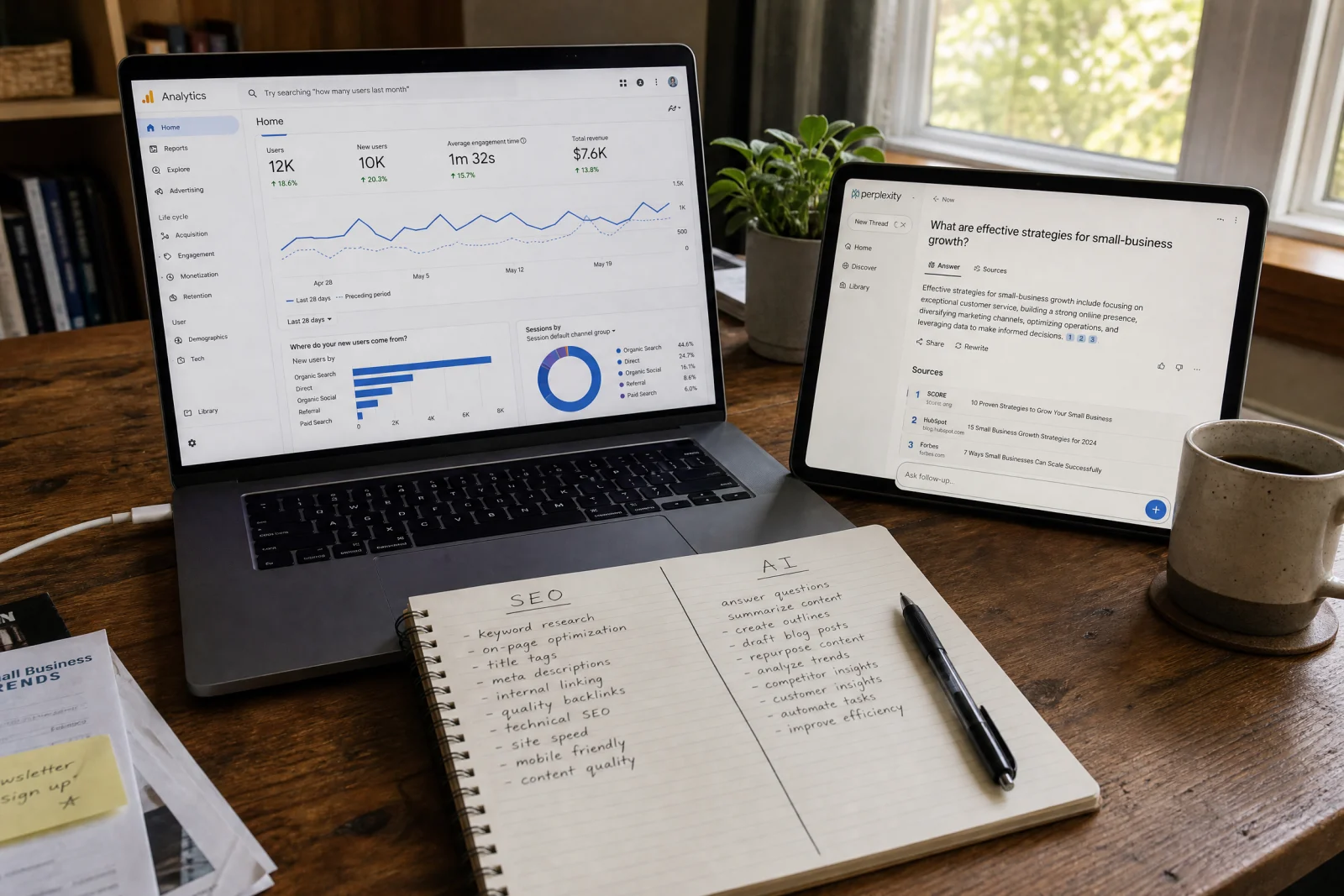
The two strategies are not the same, but they reinforce each other. SEO gets you in front of people who are searching. Answer engine optimization gets you cited when people ask. If you ignore SEO, you lose the volume. If you ignore answer engine optimization, you lose the conversion quality. The roofer needed both.
Here is where they diverge. SEO is about ranking for keywords. Answer engine optimization is about being the source an AI trusts enough to cite. SEO rewards backlinks from any domain with authority. Answer engine optimization rewards backlinks from places where real people have real conversations, like Reddit or industry forums. SEO wants you to improve for crawlers. Answer engine optimization wants you to write for humans.
And here is where they overlap. Both care about speed. Both care about mobile usability. Both care about whether your content actually answers the question someone asked. A page that loads slow and buries the answer will fail at both. The difference is that SEO will tolerate some marketing fluff as long as the keywords are there. Answer engine optimization will not.
Which one do you prioritize first? If you are a local service business, start with SEO. Once that is working, layer in your answer engine optimization strategy. Rewrite your best-performing pages in Q&A format, start answering questions on Reddit, and track your AI referral traffic. Do not abandon one for the other.
The First 48 Hours: What to Audit Before You Change Anything
One of our clients sat down last month to figure out where he stood with AI citations before he changed a single word on his site. “Best HVAC company in Orlando.” “Who should I call for AC repair near me.” “How much does it cost to replace a furnace in Florida.” He wrote down every business name that showed up. His company was not on the list.
That told him he had a problem, but it did not tell him why. So he pulled up his top three service pages and read them out loud. Every single one sounded like a brochure. Lots of “we pride ourselves” and “trusted since 2019” and “call today for a free quote.” No real questions. No real answers. Nothing that sounded like a person talking to another person.
Next, he checked his analytics to see if he was getting any referral traffic from AI tools. He filtered by source and looked for anything that said ChatGPT, Perplexity, Gemini, or Google AI. Nothing. Zero visits. That confirmed what the search test told him.
Then he went back through six months of customer emails and chat transcripts and pulled out every question a customer had asked before booking. He found thirty-two questions that showed up more than once. Questions like “Do you work on weekends?” and “How long does it take to install a new AC unit?” and “What if my unit breaks again after you fix it?” Those were real. Those were the questions he should have been answering on his site the whole time.
By the end of the second day, he had a list of what was broken and a list of questions to answer. He did not change anything yet. He knew where he stood. That audit saved him from spending a month rewriting pages that were not the problem. If you are not sure how your own site stacks up, our free scorecard walks through the same checks we use. By month three, Perplexity was citing him for emergency plumbing questions. By month four, ChatGPT started recommending him by name when people asked who to call in Tampa. His AI referral traffic went from zero to six percent of his total sessions, and those sessions converted at four times the rate of his Google traffic.
He still ranks position three on Google. His competitor still ranks lower. But now when someone asks an AI where to find a plumber, both of them show up. The difference is that our client is no longer losing forty percent of his emergency calls to a business that figured out answer engine optimization before he did. If you are a local service business and you are not showing up in AI citations yet, you are about to lose the same ground. The businesses that move now are the ones who will own those recommendations a year from now.