Google Maps SEO is the problem this guide helps a business owner diagnose before making the wrong next move. Understanding Google Maps SEO can be the difference between a full schedule and a quiet phone.
A carpet cleaning company in Manteca called us in the summer of 2024 after three months of watching their phone stay quiet. They were ranking second in Google Maps when someone searched directly in the Maps app. Second. That should have been enough to keep the schedule full. But when potential customers searched the same keywords in regular Google search, the business did not show up at all. The calls were going to competitors who ranked lower in Maps but appeared in the search results where most people actually look.
The problem was their address. They had hidden it in their Google Business Profile because they were a service area business. That made sense. But Google had quietly started filtering businesses with hidden addresses out of search results in certain markets, especially where Home Service Ads were rolling out. The business was visible in Maps but invisible everywhere else.
We switched the profile to show a real business address. A small office space they rented for about three hundred dollars a month. Within two weeks, the business started appearing in search results again. Within a month, they were getting twelve to fifteen calls a week instead of two or three.
That is the part nobody talks about when they explain Google Maps SEO. The advice is always “fill out your profile” and “get more reviews,” which is true but not the whole picture. Google’s local search results depend on three things: relevance, distance, and prominence. Relevance means your profile matches what someone is searching for. Distance means how close you are to the person searching. Prominence means how well-known and trustworthy Google thinks you are. But none of that matters if Google filters you out because of a hidden address or a category mismatch or a business name that looks like keyword spam.
The carpet cleaning company had decent reviews. Their profile was mostly complete. But the hidden address was enough to disqualify them from the results that actually mattered. Once we fixed that, the rest of the profile started working. The lesson was that one disqualifying mistake can make everything else irrelevant, and most service business owners have no idea which mistakes disqualify them until someone digs in and finds it.
The Profile Completeness Game Nobody Talks About
Every guide on local SEO for Google Maps tells you to fill out every field in your Google Business Profile. Business hours, service areas, attributes, appointment links, product catalogs. And sure, a complete profile is better than an incomplete one. But after auditing a few hundred profiles for HVAC companies, plumbers, electricians, and cleaning services, we can tell you that most of those fields do not move the needle at all.
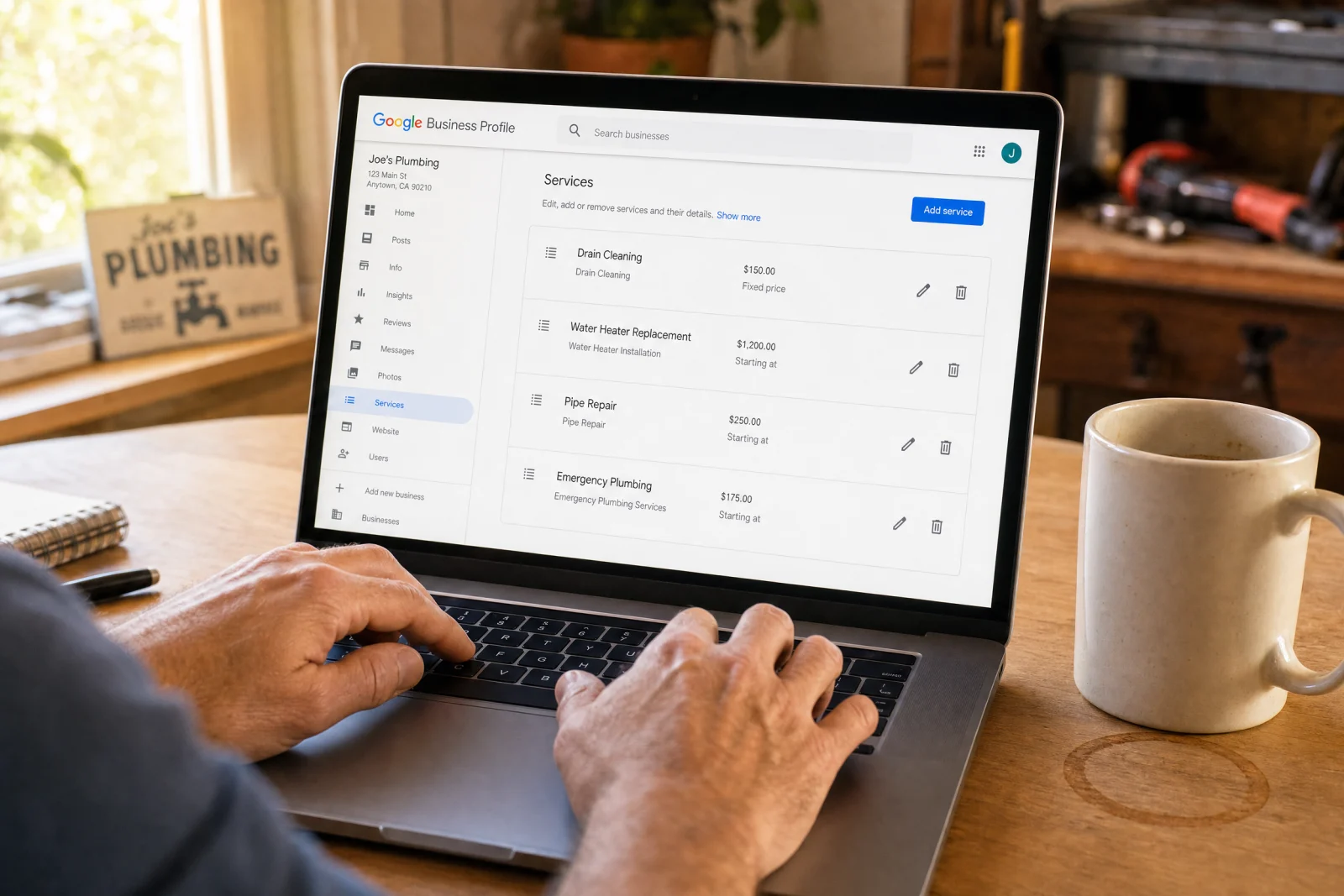
Three fields matter more than everything else combined. Your primary category, your business description, and your service list. The primary category tells Google what kind of business you are, which determines what searches you are eligible to rank for. If you are an HVAC company and your primary category is set to “Heating Contractor” instead of “HVAC Contractor,” you will rank for furnace repair but not air conditioning repair, even if you do both.
The business description is where you explain what you do and where you do it, in plain language that matches the way real customers search. Not keyword-stuffed garbage. Clear sentences that include your services and your coverage area. “We provide emergency plumbing repair, drain cleaning, and water heater replacement in Tampa and the surrounding areas” is better than “Tampa plumber Tampa plumbing Tampa FL plumbing services.”
The service list is where you add every specific thing you do as a separate line item. If you are an electrician, that means “ceiling fan installation,” “panel upgrades,” “outlet repair,” “landscape lighting,” and twenty other things, each listed individually. Google uses those service keywords to match your profile to long-tail searches. That tedium is the difference between ranking for “electrician near me” and ranking for “ceiling fan installation near me,” which is a search with way less competition and way more intent.
How We Got a Plumber 40+ Reviews in 90 Days Without Sounding Desperate
A plumbing company in Clearwater had eleven reviews when they called us in early 2025. They had been in business for six years. Eleven reviews in six years is not enough to compete in a market where the top-ranked plumber has two hundred. The owner told us he hated asking for reviews because it felt like begging, and most of the time customers would say yes and then never actually leave one.
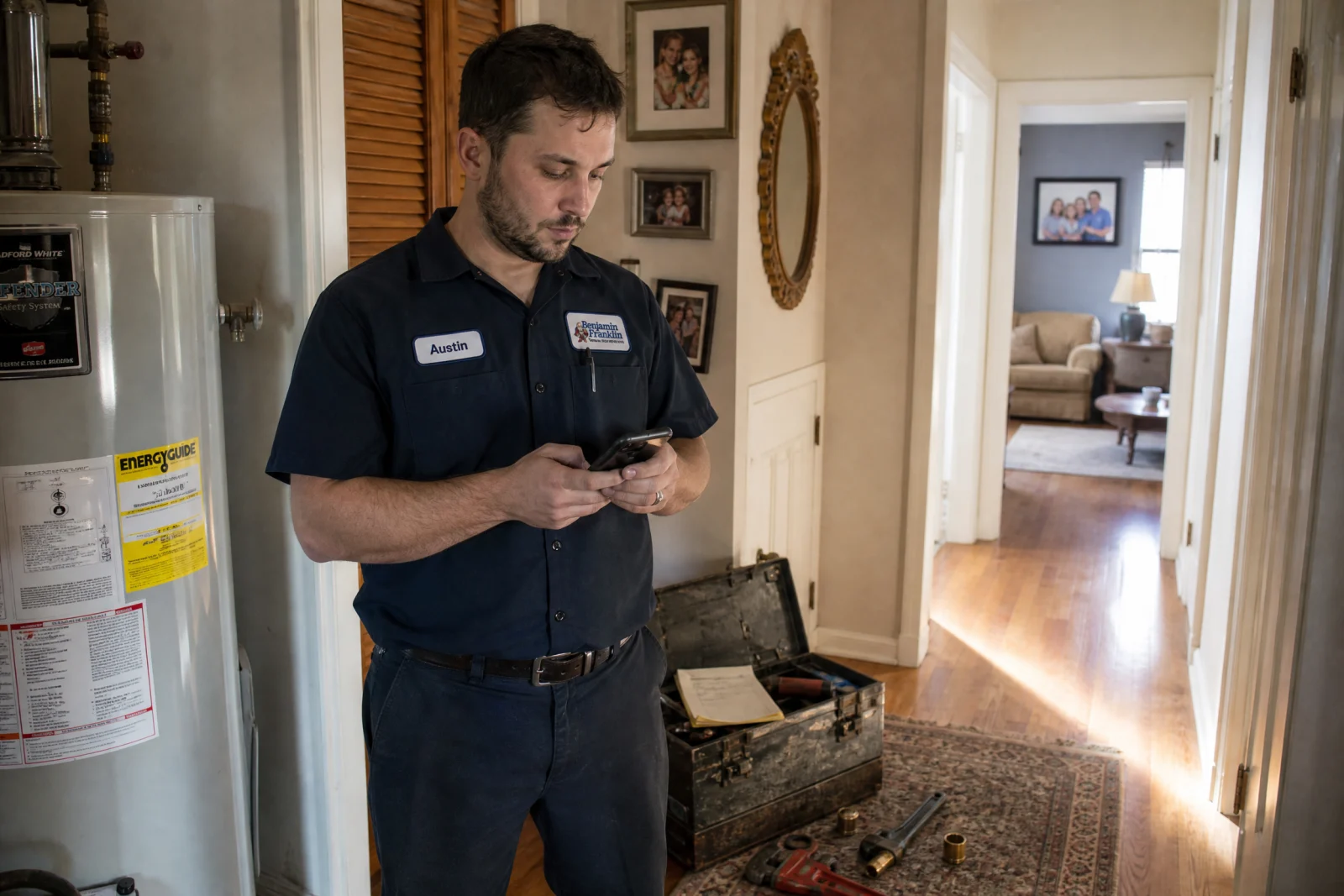
We told him to stop asking after the job was done. Instead, ask during the moment when the customer is happiest, which is right after the problem is fixed but before the plumber leaves. That is when the customer feels relief and gratitude, and that is when they are most likely to say yes and actually follow through.
The plumber started doing it in person. Not with a card or a QR code. A verbal ask while packing up tools. “Hey, if you are happy with the work, it would mean a lot if you could leave us a review on Google. I can text you a link right now if that is easier.” Then he would pull out his phone, send the link via text message while standing there, and wait thirty seconds to see if they opened it. Half the time, the customer would leave the review before he walked out the door.
In ninety days, the company went from eleven reviews to fifty-three. Not because they spammed people or bribed them with discounts. Because they asked at the right moment, in the right way, and made it easy. The follow-up emails and QR code cards failed because they required the customer to remember and take action later, when the emotional high of a fixed problem had worn off.
The other thing that helped was responding to every review within twenty-four hours. Google recommends replying to reviews as a best practice for engaging customers. Replying is not a published ranking factor on its own, but review signals like volume and recency feed the prominence side of local rankings, and we have seen consistent response habits go hand in hand with stronger showings in the top three map results. A profile with fifty reviews and zero responses looks abandoned. A profile with fifty reviews and fifty responses looks like a business that pays attention.
Citations: Stop Chasing Directories, Start Chasing Consistency
We have watched service businesses waste hundreds of dollars submitting their information to every local directory they can find, chasing some magic number of citations that will unlock better rankings. It does not work that way. Citation quantity is a vanity metric. What actually matters is whether your business name, address, and phone number are identical across the five or ten directories that customers and Google actually check.
The directories worth the effort are the ones your customers already use and the ones Google pulls data from. Submitting to two hundred directories does nothing if the top five are inconsistent. Fix those first. Make sure the name, address, and phone number match character for character. The Better Business Bureau and Yelp are two examples of high-authority directories that Google trusts and that customers actually check before hiring a service business.
Posts and Photos That Customers Actually Click On (Not Scroll Past)
Most Google Business Profile posts are a waste of time. “We’re hiring!” posts. “Happy holidays from our team!” posts. Stock photos of smiling technicians standing in front of a truck. Nobody clicks on those. They exist because someone read that posting regularly helps with your Google Maps SEO, which is true, but only if the posts are relevant to what customers are searching for in that moment.
The posts that actually convert are the ones tied to a specific problem the customer is trying to solve right now. An HVAC company posting “Is your AC making a grinding noise? That usually means the blower motor is failing. We can diagnose and fix it same-day” in June gets clicks. A plumber posting “Sewer line backed up? We have a camera inspection truck and can find the clog in under an hour” during a rainstorm gets calls.
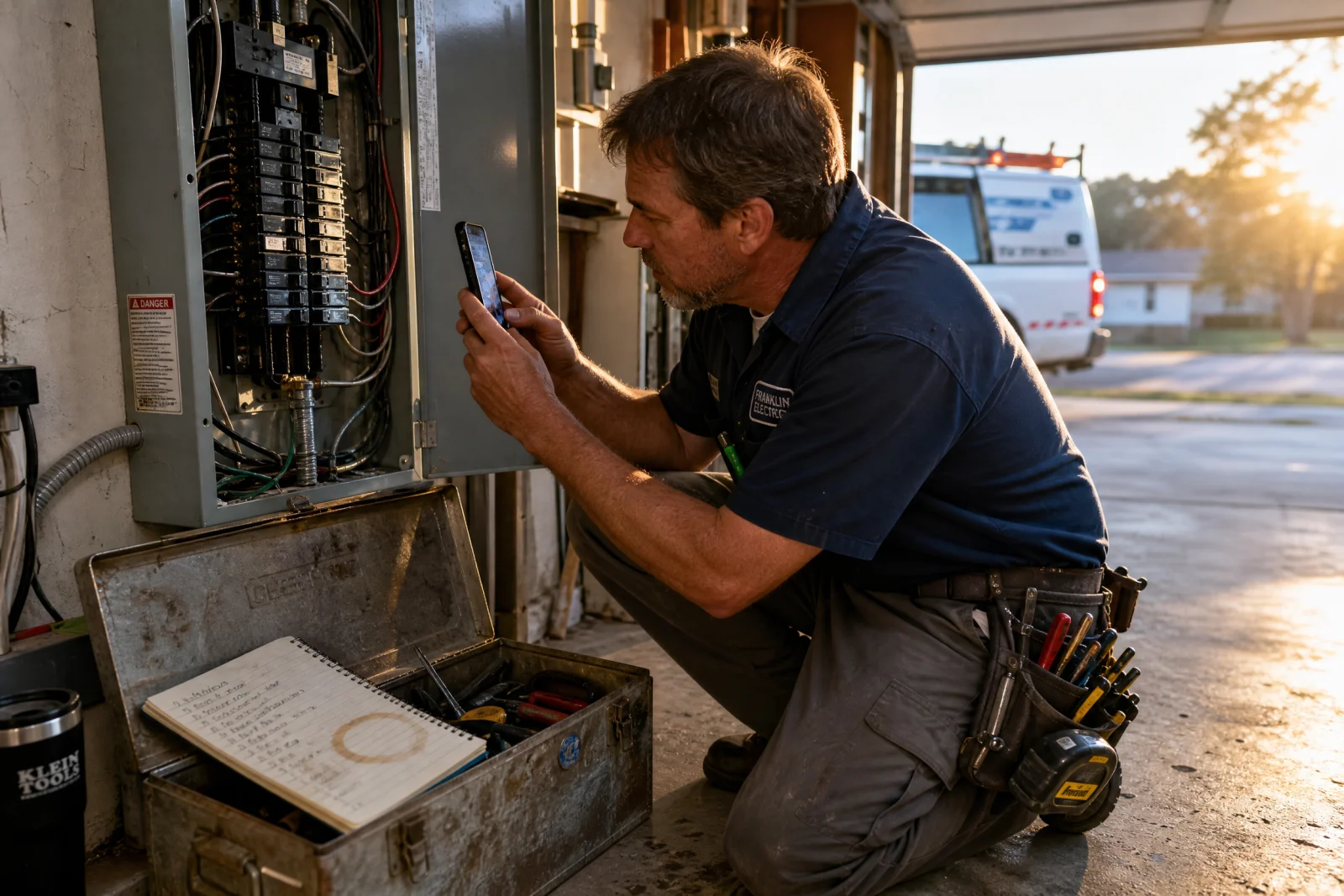
Photos work the same way. Generic exterior shots of your building do nothing. Photos of the actual work you do, taken on-site at a customer’s house, show proof that you know what you are doing. A close-up of a technician replacing a capacitor on an AC unit. A before-and-after of a clogged drain. A new water heater installed in a garage. Those photos make the profile feel real and active.
The angle matters more than the quality. A slightly blurry photo taken on a phone at a job site is better than a perfectly staged stock photo. Customers can tell the difference, and so can Google’s algorithm, which prioritizes profiles that upload fresh photos regularly. We tell clients to take three photos at every job and upload them the same day. It takes two minutes and makes the profile look like a business that is actually working.
The One Thing 98% of Your Competitors Are Not Doing (And It Takes Ten Minutes)
There is a specific habit almost none of your competitors have, and it rests on a ranking factor Google actually documents: complete, accurate, up-to-date business information. It is not a hack. It is not a loophole. Google says businesses with complete and accurate profiles are easier to match with the right searches, which means stale or wrong details quietly cost you visibility.
Once a week, open your own profile the way a customer would. On your phone, in the actual Maps app. Search your main keyword, find your listing, and audit it. Check that your hours are still right, your primary category still matches what you actually sell, your service list covers the work you did this month, and no reviews or customer questions are sitting unanswered. Ten minutes, once a week, and you catch the small errors and gaps that let a profile drift out of relevance.
We started doing this with a landscaping client in 2025, and within three weeks they moved from position four to position two in the map pack for their main keyword. Is the weekly audit the only reason they moved up? No. They were also posting photos and responding to reviews. But it was the one thing they were not doing before. More importantly, it forced the owner to check the profile regularly and notice things that needed fixing.
Audit Your Google Maps SEO Performance This Week (Here’s Exactly What to Check)
If you have not logged into your Google Business Profile Insights in the last thirty days, you are flying blind. The Insights tab shows you exactly what search terms are bringing people to your profile, how many people are clicking your phone number or website, and how many people are asking for directions. That data tells you what is working and what is not.
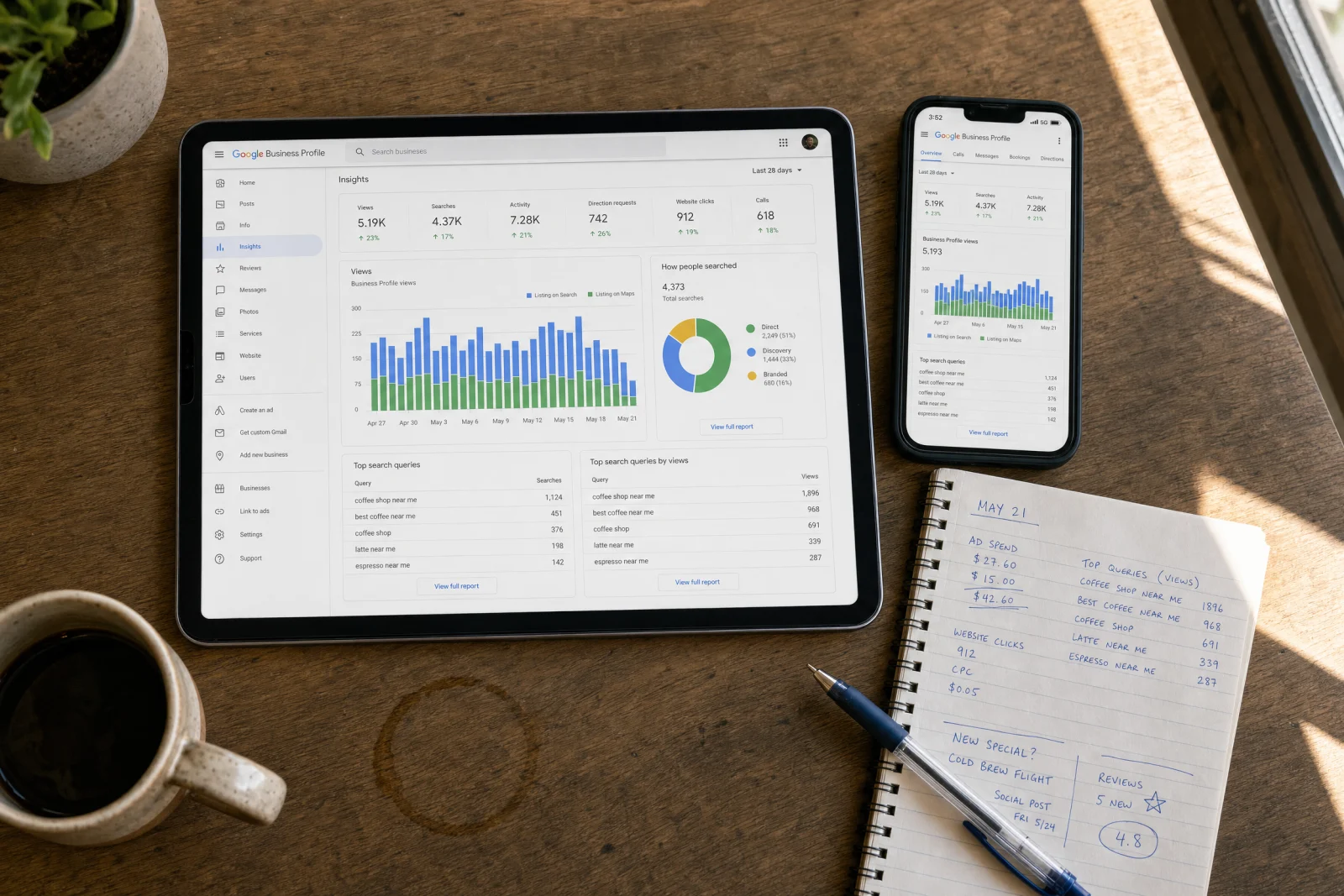
Pull three numbers this week. First, check which search queries are showing your profile in the map pack. If you are ranking for searches that do not match your services, your primary category or service list is probably wrong. Second, check how many people are clicking your phone number versus your website. If phone clicks are low, your number might be buried or your profile might not look trustworthy enough to call. Third, check how many people are asking for directions. If that number is high but phone calls are low, customers might be driving to your location expecting a storefront when you are a service area business.
Use that data to decide what to fix next. If you are ranking for the wrong searches, update your categories and services. If phone clicks are low, add more photos and respond to more reviews to build trust. The Insights tab is not a report card. It is a diagnostic tool that reveals exactly where your Google Maps SEO efforts need the most attention. If you are not sure where to start with your own profile, our local SEO services can help identify the disqualifying mistakes that are holding you back. We also offer a website scorecard that walks through the same technical checks we run for clients.
Why Most Google Maps SEO Advice Fails (And What We Do Instead)
Most advice about Google Maps SEO optimization assumes every business is starting from the same place, with a complete profile and no disqualifying mistakes. But after working with dozens of HVAC companies, plumbers, electricians, and cleaning services since 2018, we can tell you that almost every business we audit has at least one thing broken that is quietly killing their rankings. A wrong category. A hidden address in a market where Google filters those out. A business name stuffed with keywords that triggers a spam filter.
The businesses that dominate local search are not doing ten things pretty well. They are doing three things exactly right. They have a profile that is set up correctly with no disqualifying mistakes. They have enough recent reviews to look trustworthy and active. And they are posting photos and updates often enough that Google sees them as a real, operating business instead of a stale listing. Everything else is optimization on top of that foundation, and without the foundation, the optimization does not matter.
That carpet cleaning company in Manteca is still ranking second in Maps and now shows up in search results too. They get twenty to thirty calls a week instead of two or three. The fix was not complicated. It was specific, and it required someone to look at the profile the way Google’s algorithm looks at it instead of the way a business owner looks at it. That is the difference between advice that sounds good and advice that actually works for your Google Maps SEO strategy.