AI receptionist for small business is the problem this guide helps a business owner diagnose before making the wrong next move. If you run a trade business and you’re losing jobs because your phone goes unanswered, an AI receptionist for small business might be the fastest way to stop leaving money on the table.
The Call Your Trade Business Missed Last Tuesday (And Why It Cost More Than You Think)
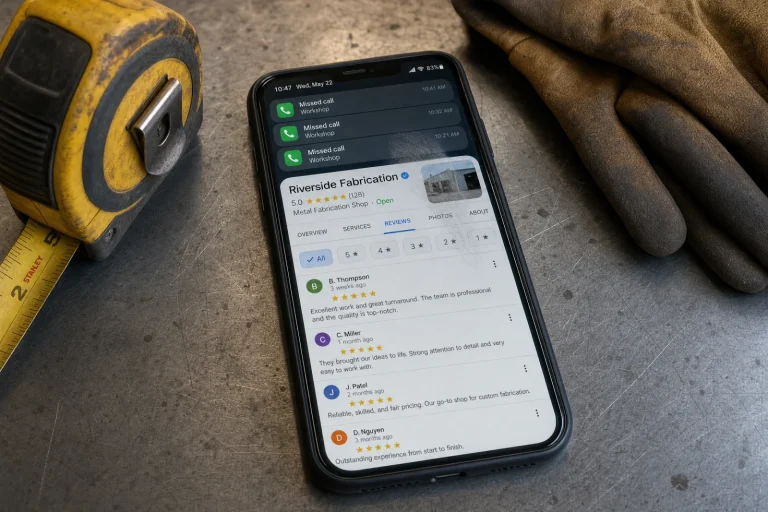
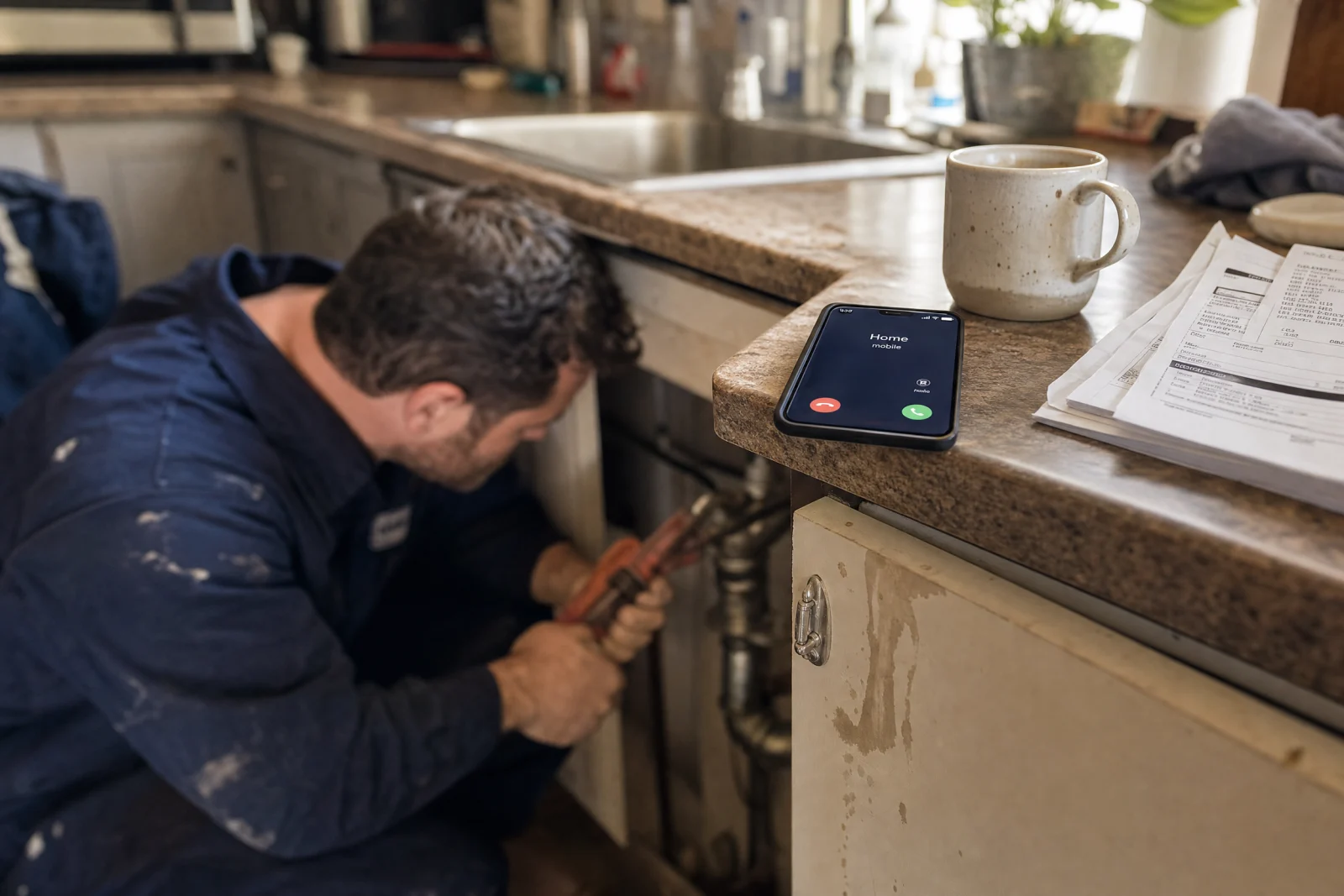
A plumber we work with missed a call at 2:47pm on a Tuesday. He was under a sink with both hands full, his phone buzzing in the truck. The homeowner had a burst pipe in the laundry room and water spreading across the floor. She called three other plumbers before someone picked up. The job was worth around twelve hundred dollars, and it went to whoever answered first.
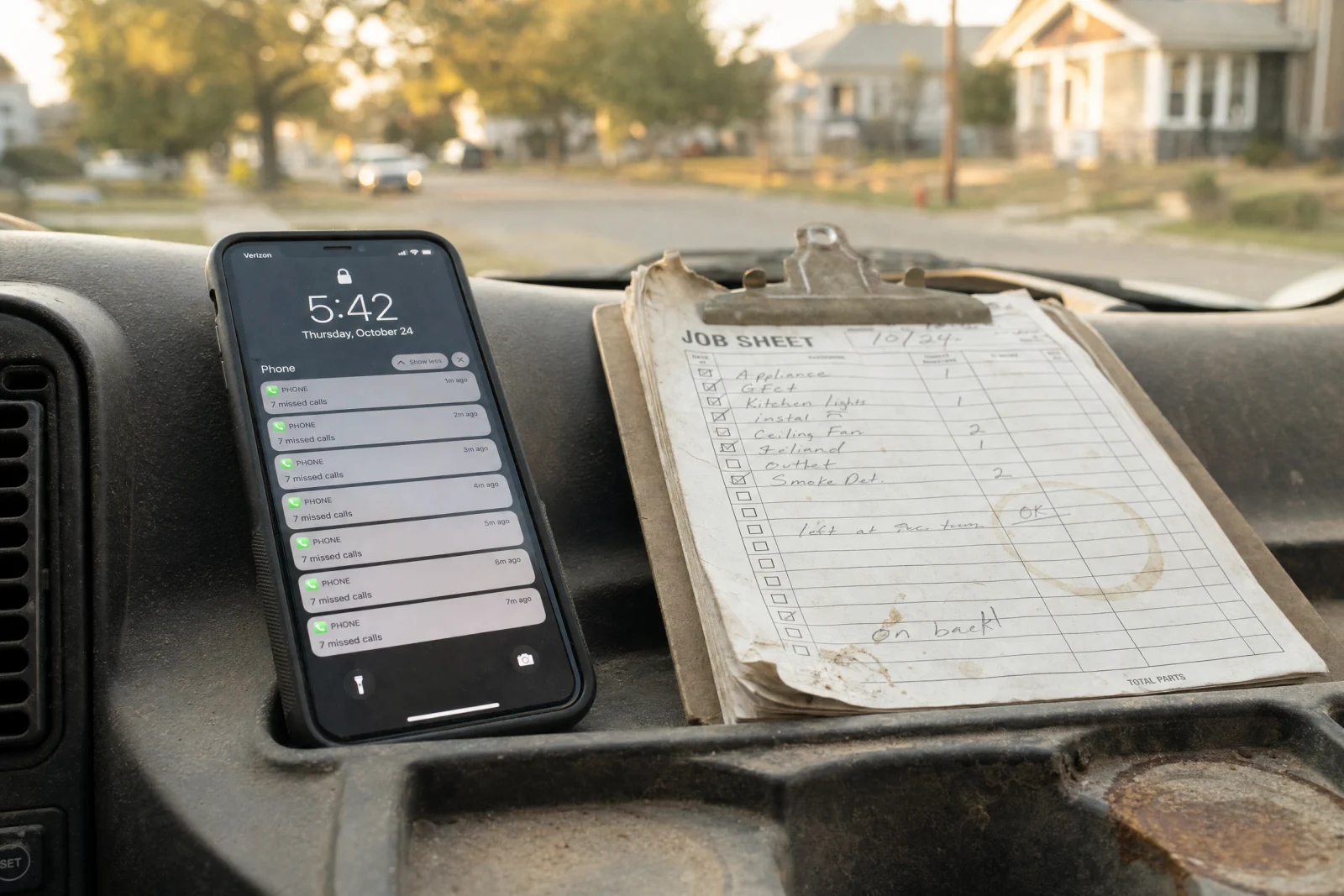
That story is not unusual.
Companies that sell answering services circulate some eye-catching numbers about this problem: that nearly half of calls to small businesses go unanswered, that most callers who hit voicemail never try again, that missed calls add up to six figures a year in lost work. Those are vendor marketing estimates, not independent research, so we would not stake anything on the exact percentages. But the direction matches what we see with our own clients. Callers who cannot reach you move to the next name on the list. For trade contractors, that means every missed call during a job site visit, every evening ring that goes to voicemail, every weekend emergency that nobody picks up is money walking out the door.
We have been building lead systems for HVAC, plumbing, electrical, and cleaning companies since 2018, and the pattern is always the same. The businesses that grow are the ones that answer. The ones that struggle are the ones with great websites, solid reviews, and phones that ring into the void while they are on a ladder or stuck in traffic. That is exactly why more contractors are exploring an AI receptionist for small business to capture every opportunity.
For years, the fix was a live answering service. You paid someone to pick up when you could not. But live services come with their own problems. They cost anywhere from three hundred to six hundred dollars a month for basic coverage, they still miss calls during shift changes, and half the time the person answering has no idea what a condenser unit is or why someone needs same-day service. We watched clients pay for months of coverage only to lose jobs because the answering service put a panicked homeowner on hold for four minutes.
That is where the AI receptionist for small business category started making sense. Not as a gimmick, but as a tool that solves the specific problem of being unreachable when a paying customer needs you right now. The breaking point was watching an HVAC contractor pay nearly four thousand dollars over the summer for a service that booked exactly two jobs and let nine calls go to voicemail during a heat wave because they were understaffed.
The advantage of an AI answering service is brutally simple. It picks up every single time, twenty-four hours a day, without sick days or lunch breaks or shift changes. It costs a fraction of what you pay a live service. And if you set it up correctly, it can pull information straight from your calendar, answer basic questions about pricing and availability, and book appointments without putting anyone on hold.
The trade-off is equally simple. An AI receptionist cannot handle an angry customer who wants to argue about a bill. It cannot negotiate a complex commercial job or soothe someone who is upset about a missed appointment. Those situations still need a human. But for the bulk of inbound calls to a trade business, someone calling at nine at night because their AC died or their toilet is overflowing, the AI does exactly what it needs to do. It captures the lead, gets contact information, and books the appointment while the customer is still on the line.
We have seen contractors go from missing half their after-hours calls to capturing nearly all of them within the first week of switching. That is not marketing talk. That is what happens when the phone actually gets answered.
The Two AI Receptionists That Actually Work for Trade Contractors
We have tested seven different AI receptionist tools with real plumbing, HVAC, and electrical clients over the past year. Two of them worked well enough that we still recommend them. The rest either failed during setup, could not integrate with the scheduling tools our clients actually use, or sounded so robotic that customers hung up.
The first one that consistently works is Goodcall. It starts at seventy-nine dollars a month and includes unlimited minutes, which matters when you are running a trade business and calls can stretch to ten or fifteen minutes while someone describes a broken water heater. The feature that makes it useful is the way it handles appointment booking. It connects directly to most scheduling systems, checks real availability, and books the job without making the customer wait for a callback. The limitation is that it charges fifty cents per unique customer after you hit your plan limit, so if you get a flood of new calls in one month, the bill can climb. But for most small contractors, the starter plan covers what they need.
The second option we recommend is RingCentral’s AI receptionist add-on, which starts at thirty-nine dollars a month if you are already using RingCentral for your phone system. It includes a hundred AI minutes, and you can buy more in bundles if you need them. The advantage here is integration. If your business already runs on RingCentral, adding the AI layer takes about fifteen minutes. The downside is that a hundred minutes disappears fast if you get a lot of calls, and the per-minute overage cost adds up. We have seen contractors blow through their minutes in the first week and end up paying more than they expected.
The other five tools we tested all had problems. Smith.ai charges ninety-five dollars a month for the self-service plan, but the setup is clunky and it does not integrate cleanly with the scheduling tools most trade businesses use. Rosie starts at forty-nine dollars a month, but the voice quality is noticeably worse and customers kept asking to speak to a real person. Two others, IONOS and ARROW, are UK-focused services priced in pounds, so if you run a US business you can cross both off your list right away. Even for UK readers, IONOS’s cheapest tier only covers thirty calls a month, which is not enough for any contractor who actually wants to grow. And 3CX requires you to manage your own hosting and SIP trunking, which means the real cost is closer to fifteen hundred dollars a year once you add everything up, and most small business owners do not want to become their own IT department.
If you are running a trade business and you need something that works this week without a lot of setup, start with Goodcall or RingCentral depending on what phone system you already have. If you want to test the idea before committing, most of them offer free trials. Do not expect magic. The AI is only as good as the information you give it during setup.
Getting Your First Jobs Booked in 48 Hours with an AI Receptionist for Small Business
The moment you activate the AI receptionist, the first thing that happens is nothing. Your phone does not ring differently. Your website does not change. But the next time a call comes in and you are on a job site, the AI picks up instead of sending it to voicemail.
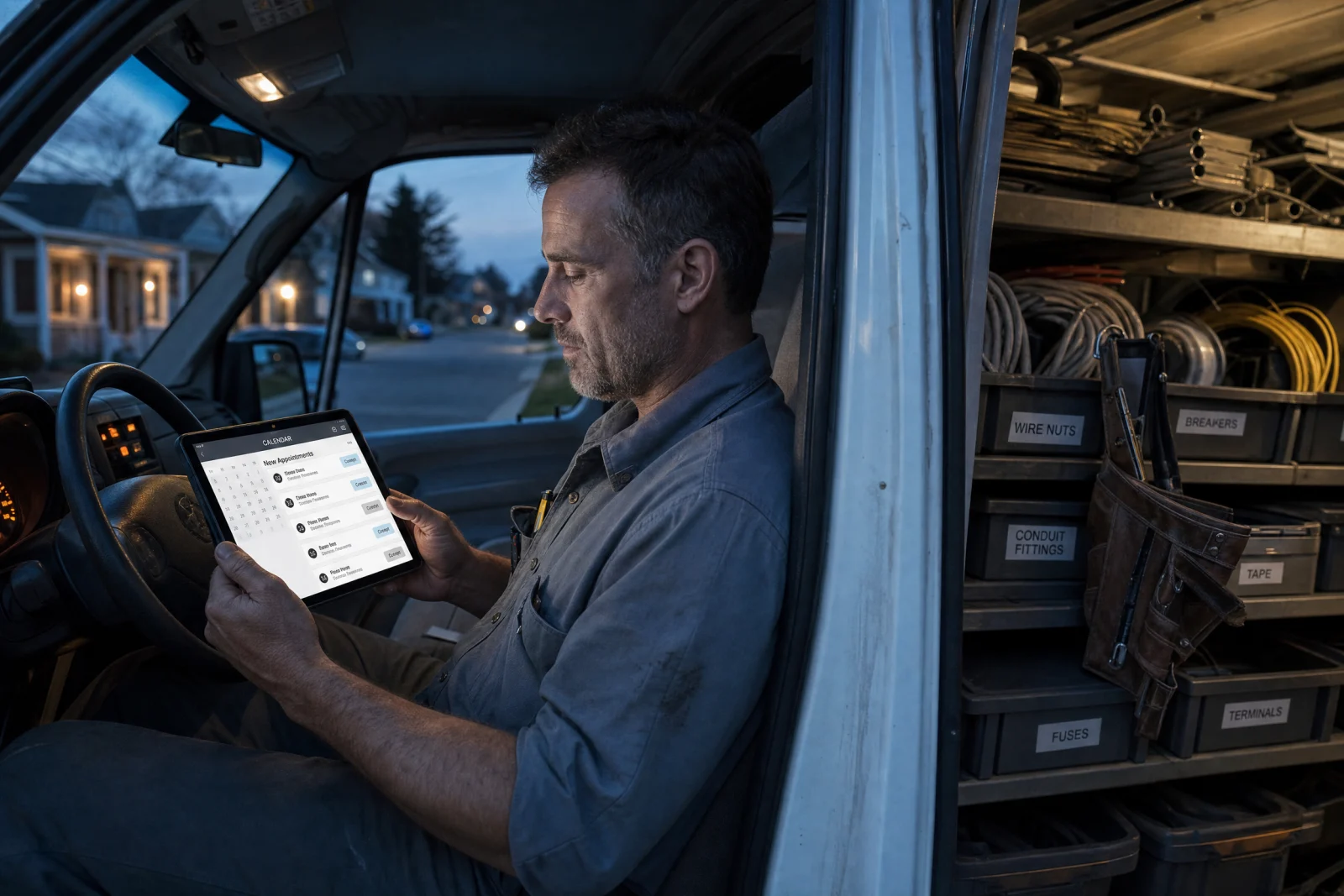

We set up a system for an electrician last fall, and his first AI-answered call came in at seven-thirty that same evening. A homeowner needed an outlet installed in the garage before the weekend. The AI asked for the address, confirmed the type of work, checked the calendar, and booked a slot for Thursday morning. The electrician got a text with the details while he was finishing dinner. By the time he looked at his phone, the job was already on the books.
That is what the first forty-eight hours look like when it works. Calls come in, the AI handles them, and appointments show up in your calendar without you touching anything. The information flows straight to your phone or your scheduling system, and you show up to do the work.
The most common mistake people make in those first two days is not testing the system themselves. They set it up, assume it works, and then find out a week later that the AI has been booking appointments for the wrong service area or asking for information it does not need. We tell every contractor to call their own number three or four times, pretend to be a customer, and listen to what the AI actually says. If it sounds confusing or asks too many questions, fix it before real customers start calling. If you are not sure whether your current phone setup is losing you calls, our team at Blue Coast Web Services can help you audit your entire lead capture process and find the gaps that cost you jobs.
The payoff is immediate. One plumbing client told us he captured four jobs in the first weekend that he would have missed entirely because he does not work Saturdays and his phone used to go straight to voicemail. Those four jobs paid for six months of the AI service. That is the difference between answering and not answering.
The One Situation Where You Still Need a Human on the Line
An AI receptionist falls apart the second a customer gets angry. We watched this happen with a contractor whose client called furious about a missed appointment. The AI tried to help, the customer started yelling, and the AI kept offering to book a new time slot while the person on the other end wanted to speak to the owner immediately. The call ended with the customer hanging up and leaving a one-star review.
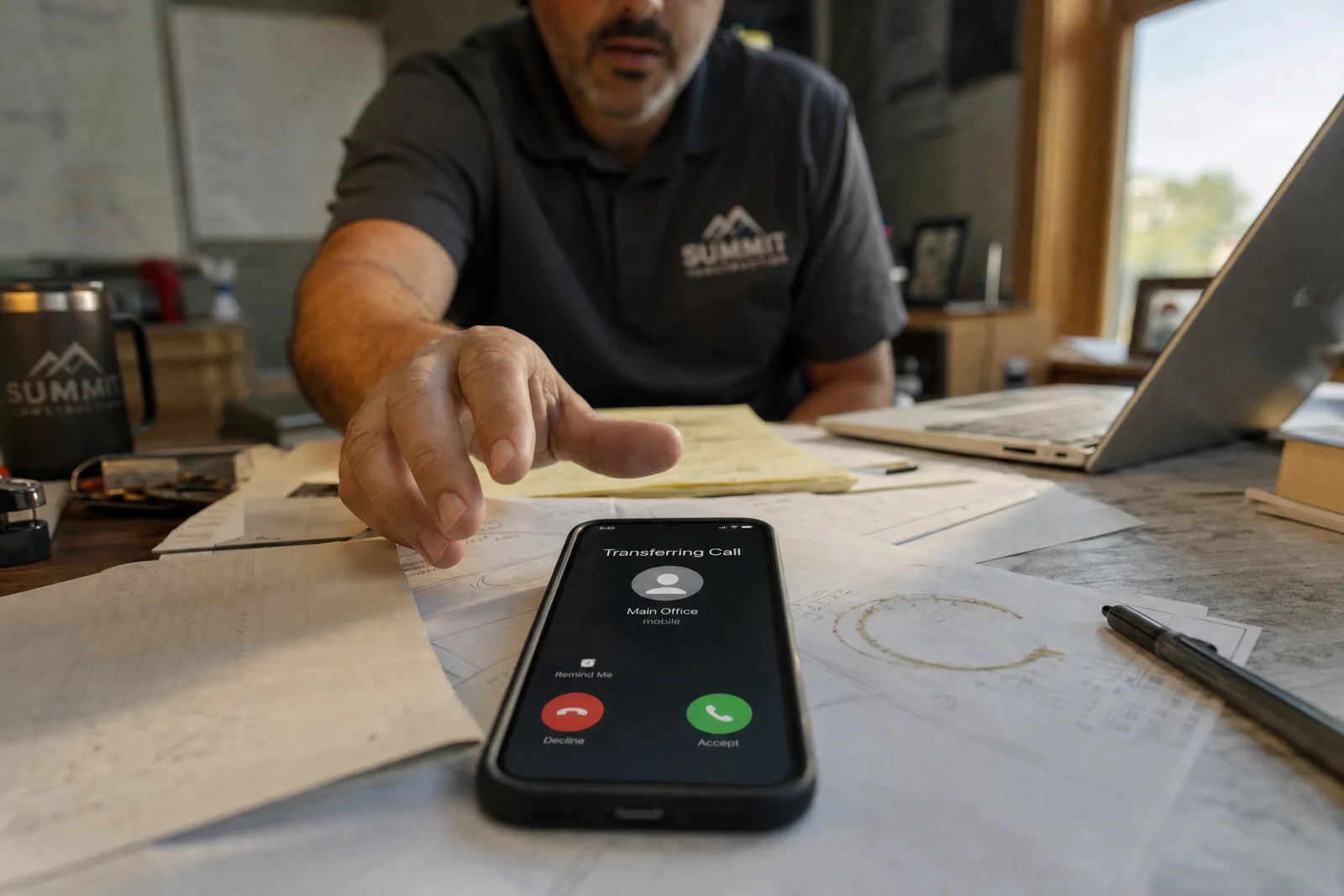
Anything involving conflict, negotiation, or emotion still needs a real person. If someone is upset about a bill, if they want to argue about the scope of work, if they are calling because something went wrong and they want someone to fix it right now, the AI cannot handle that. It does not read tone well enough, and it does not know when to stop talking and listen.
The fix is simple. Set up the AI to transfer angry or complex calls to your cell phone or to a live answering service for escalations. Most of the best AI receptionist for small business tools let you configure transfer rules. That way, routine booking calls get handled automatically, and the tough conversations still reach a human.
Start Capturing Every Call This Week
If you missed a call last week that turned into someone else’s job, sign up for a free trial of Goodcall or RingCentral today. Set it up, test it with a few fake calls, and let it run for a week. Most contractors see their first AI-booked appointment within twenty-four hours.
The cost of doing nothing is another job like that twelve-hundred-dollar burst pipe going to whoever answers first, the next time your phone rings and you are under a sink with both hands full. The cost of trying an AI receptionist for small business is seventy-nine dollars a month and fifteen minutes of setup. We have seen the math work for plumbers, electricians, HVAC techs, and cleaning companies. The ones who answer the phone are the ones who grow.
Stop missing calls this week.