Getting local SEO for service businesses right comes down to a few decisions most service-business owners rush — here is what actually matters.
A plumbing company called us last spring after three months of watching their Google Business Profile sit at the top of local searches while their phone stayed quiet. They had photos, hours, services listed—everything the setup guides told them to do. But when we pulled up their profile on a phone, the way an actual customer would see it, the problem was obvious. Their service area was set to a single ZIP code in a city where most emergency calls come from the surrounding suburbs. Someone searching for a plumber ten minutes away saw their profile buried on page two, if at all.
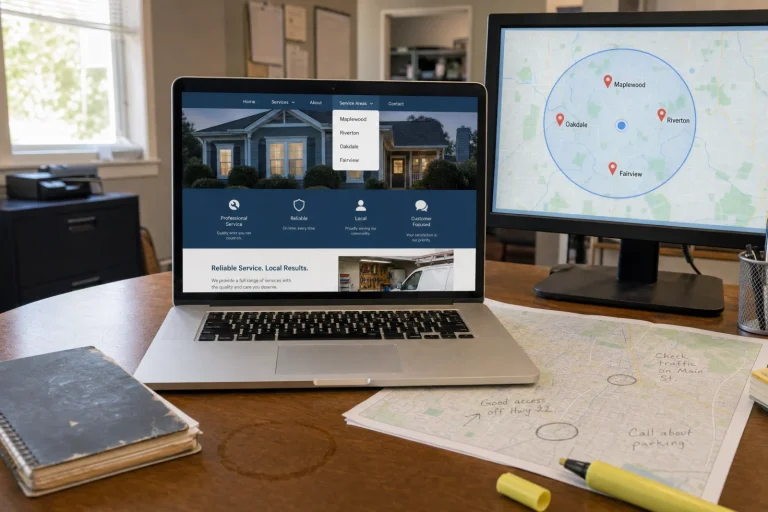
We expanded their service area to cover the full metro radius they actually drove to. Not the entire state, not some aspirational hundred-mile zone— the twenty-minute drive they were already making for jobs. Within two weeks, calls from neighboring towns went from zero to twelve. The profile had not changed. The reviews had not changed. The only difference was that Google finally knew where they were willing to show up.
That radius setting is the single most common mistake we see in local SEO for service businesses. A contractor sets their address, assumes Google will figure out the rest, and then wonders why they are invisible three towns over. Google does not guess. If your service area is not explicitly defined, you are only visible to people searching within a few blocks of your listed address. For a plumber, an HVAC tech, or an electrician, that is a death sentence.
The second fix was photos. Not the stock images of smiling technicians in clean uniforms—those do nothing. We had them upload ten photos from actual jobs: a furnace mid-repair, a finished bathroom remodel, a van parked in a driveway. Google prioritizes profiles with recent, real photos, and customers trust them more than polished marketing shots. The profile went from three generic images to fifteen job-site photos, and the click-through rate from search to phone call jumped by thirty-eight percent in the first month.
The third piece was the Q&A section, which most service businesses ignore completely. We found four unanswered questions sitting on the profile, two of them asking about emergency availability. No response. A competitor could have answered those questions, and sometimes they do. We started monitoring the Q&A weekly, posting answers within a day, and adding our own questions to preempt the common ones: “Do you offer same-day service?” “What areas do you cover?” “Are you licensed and insured?” The questions show up in search results. An answered question is free advertising. An unanswered one is a missed job.
The profile went from a static listing to something that actually worked. Calls from Google Maps went from eight per month to forty-three. Lead quality improved because the service area filter meant fewer calls from towns they did not cover. The whole fix took about ninety minutes of work and cost nothing. But it required knowing what Google actually uses to decide who shows up when someone searches for help.
For a broader baseline, Google’s SEO Starter Guide is a useful external reference for making helpful pages easier for people and search engines to understand.
The Citation Mess That’s Making Google Doubt Your Existence
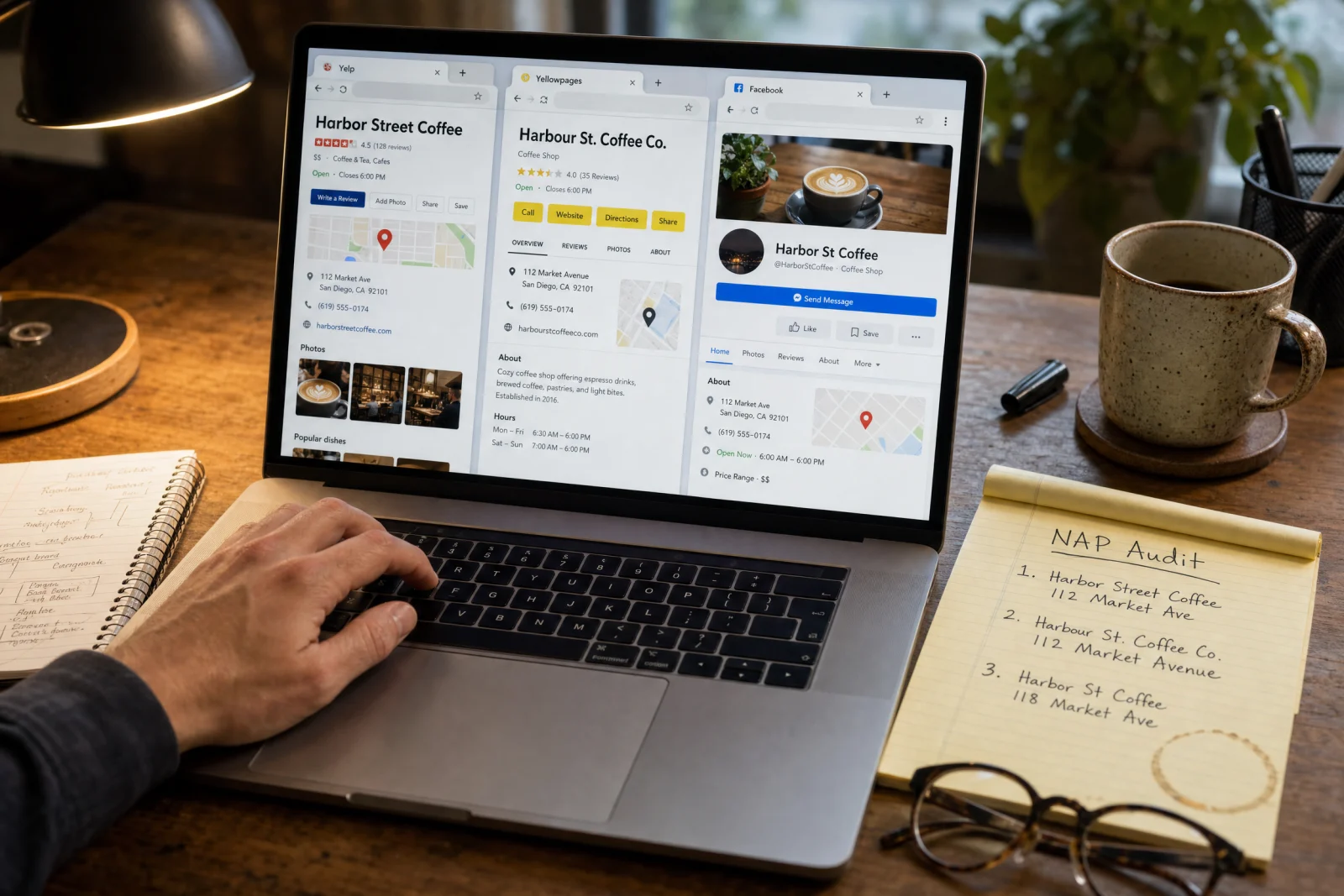
Inconsistent citations are worse than no citations at all. If your business name is “ABC Plumbing” on your website, “ABC Plumbing LLC” on Yelp, and “A.B.C. Plumbing & Heating” on Yellowpages, Google sees three different businesses and trusts none of them. We have watched service businesses spend hundreds of dollars building citations across fifty directories while their name, address, and phone number were different on each one. It did nothing.
The myth is that more citations equal better rankings. Ten accurate citations beat fifty messy ones every time. We stopped chasing directory quantity years ago. Now we audit what already exists, fix the broken ones, and ignore the rest.
For the audit, we use Semrush Local or Whitespark because they pull citation data fast and show discrepancies in a single export. The free tools miss half the directories and take three times as long. We ran an audit for an HVAC company last fall, found their NAP listed inconsistently across nineteen directories, and spent two hours logging into each one to update it. Two weeks later, their Google Business Profile started ranking in towns where they had been invisible. No new backlinks, no content changes— clean data.
The cleanup process is not complicated. Pull the audit report, sort by highest-authority directories first, update the NAP to match exactly what is on your Google Business Profile, and wait. Google recrawls citations slowly. You will not see movement overnight, but within a month the effect is clear.
Local Keywords That Actually Make Your Phone Ring (Not Pad Your Analytics)
An electrician we worked with was ranking for “residential electrical services” and getting almost no calls. The keyword had decent search volume, his page was on the first page of Google, and the traffic looked good in Analytics. But the phone stayed quiet because nobody searching that phrase was ready to hire. They were browsing. Researching. Maybe planning a project for next year.
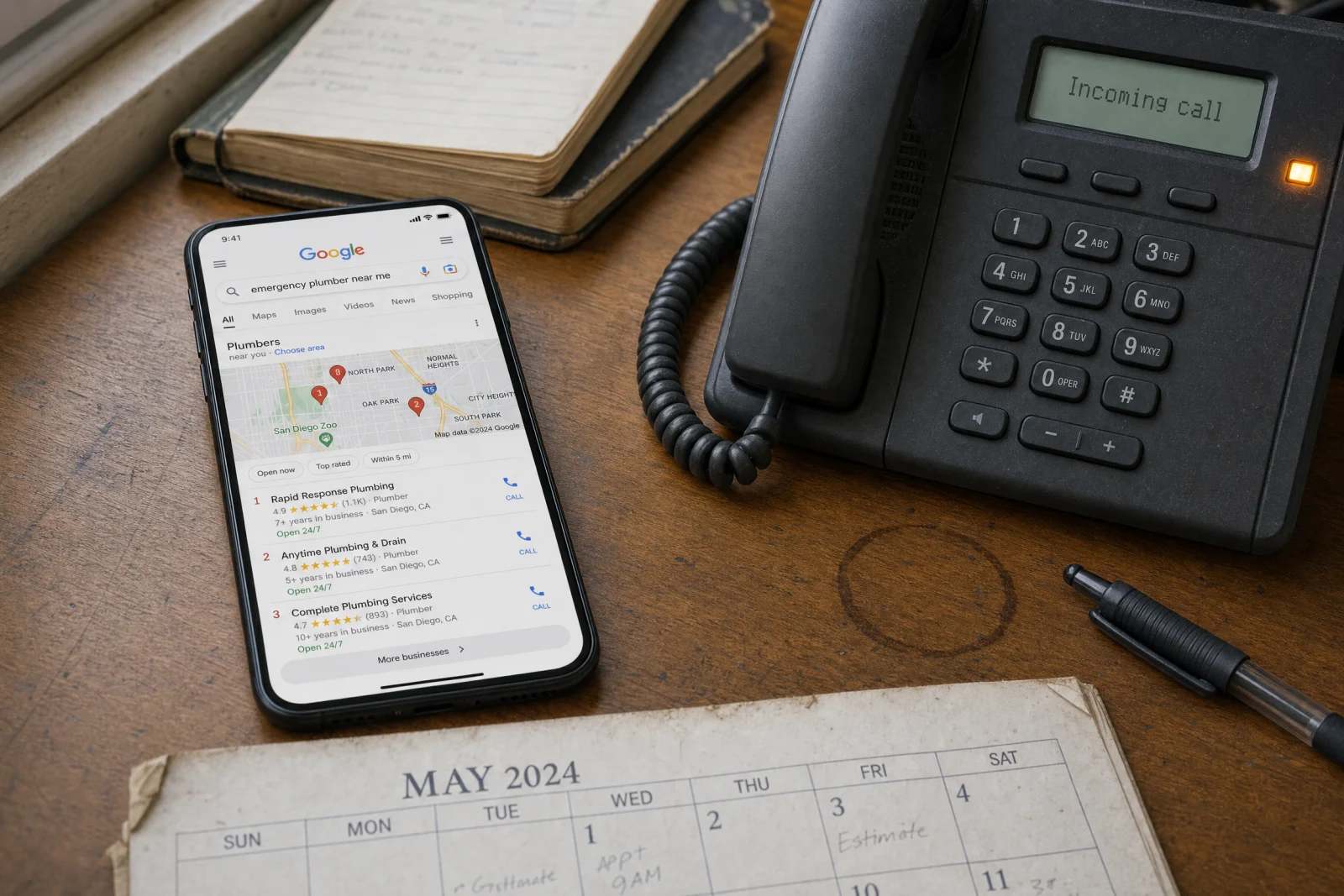
We pulled his call recordings and listened to what customers actually said when they called. “I need someone to fix an outlet that stopped working.” “My breaker keeps tripping and I don’t know why.” “Is there an electrician available today?” Not a single person used the phrase “residential electrical services.” They described the problem and the urgency.
We rebuilt his landing pages around the keywords people used when they had a problem right now: “electrician near me open now,” “emergency electrical repair,” “outlet not working.” The search volume for each keyword was lower than the vanity terms he had been chasing, but the conversion rate was three times higher. A hundred visits from people searching “emergency electrician” brought more jobs than a thousand visits from people searching “electrical services.”
The best keyword we found was not in any tool. It came from a voicemail: “I need someone who can come out tonight, my power went out in half the house.” We turned that into a landing page targeting “power out in half the house,” and it ranked within two weeks because almost nobody else was targeting that exact phrase. It brought in four jobs in the first month, all high-ticket emergency calls.
To find these keywords, we stopped relying on keyword tools and started listening to customers. We searched Google Maps for competitor listings and read the questions people asked in the Q&A sections. We pulled the search terms report from the client’s Google Ads account to see what people typed before calling. We recorded intake calls and transcribed the first sentence. The patterns were obvious once we looked. People searching for service businesses do not use marketing language. They describe what is broken and when they need it fixed.
The shift from vanity keywords to intent-driven keywords changed everything. Traffic dropped by twenty percent. Calls doubled. Revenue went up forty percent because the leads were ready to hire, not browsing. This approach to local SEO for service businesses prioritizes conversion over volume, and that is what actually pays the bills.
How We Actually Got Reviews Without Sounding Like We Were Begging
Most review-request strategies feel desperate. The email templates, the printed cards left on the counter, the verbal ask at the end of a job—they all sound like begging, and customers can tell. We tried all of them. None of them worked consistently.
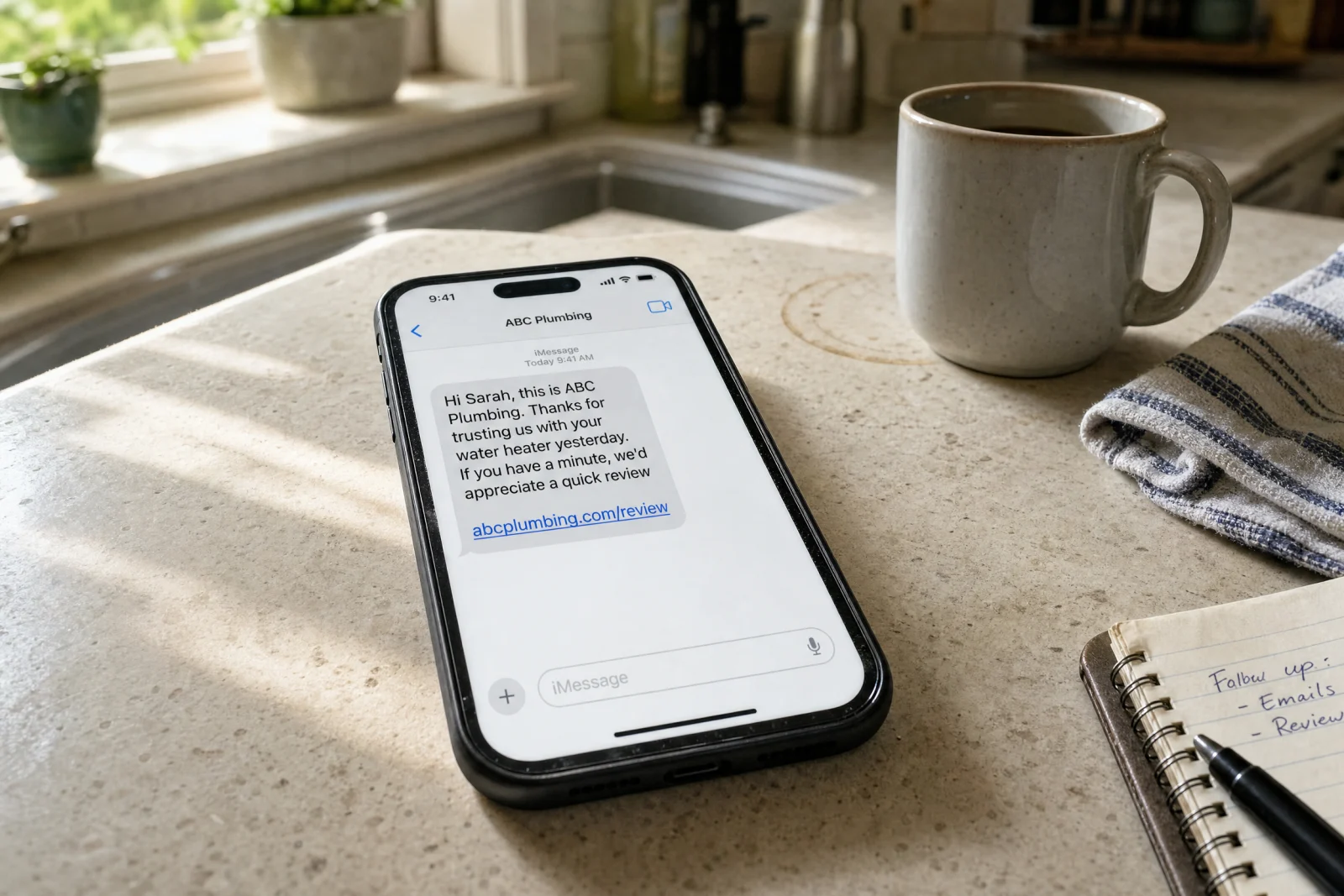
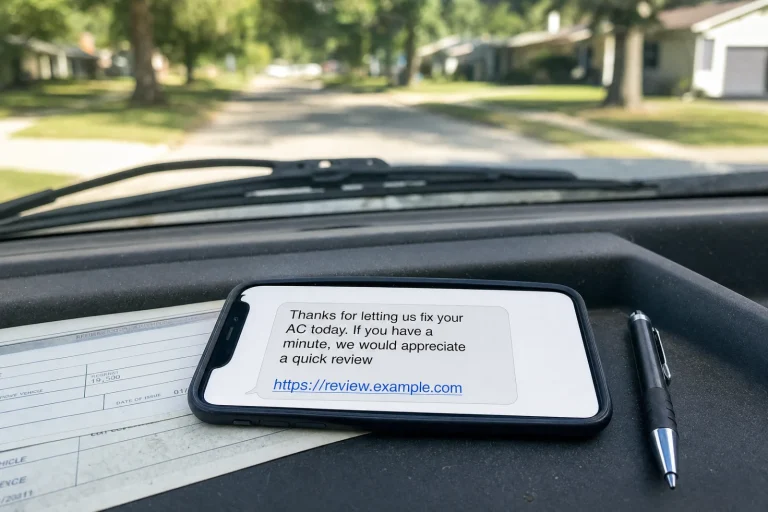
The system that finally worked was a text message sent twenty-four hours after the job was finished. Not immediately—people need time to see that the repair actually held. Not a week later—by then they have forgotten. Twenty-four hours is the window where the experience is still fresh but the urgency has passed.
The message was short: “Hi [Name], this is [Company]. Thanks for trusting us with your [service] yesterday. If you have a minute, we’d appreciate a quick review: [direct link to Google review page]. No pressure either way.” No incentive, no guilt trip, no multi-paragraph explanation of why reviews matter. A link and an easy out.
The response rate was about thirty percent, which does not sound high until you compare it to the two percent we got from email requests. We went from two or three reviews per month to twelve to fifteen. The key was the channel and the timing. Text messages get read. Emails get ignored. And twenty-four hours is early enough that the customer remembers your name but late enough that they know the job was done right.
Why You’re Invisible in Towns 20 Minutes Away (And How to Own Multiple Markets Without Multiple Locations)
A cleaning company we worked with kept losing jobs to competitors in the next town over, even though they drove there for jobs all the time. The problem was not their service or their pricing. It was that Google did not know they worked there. Their Google Business Profile listed one address, their website had one generic service area page, and when someone in the neighboring town searched for a cleaning service, they did not show up.
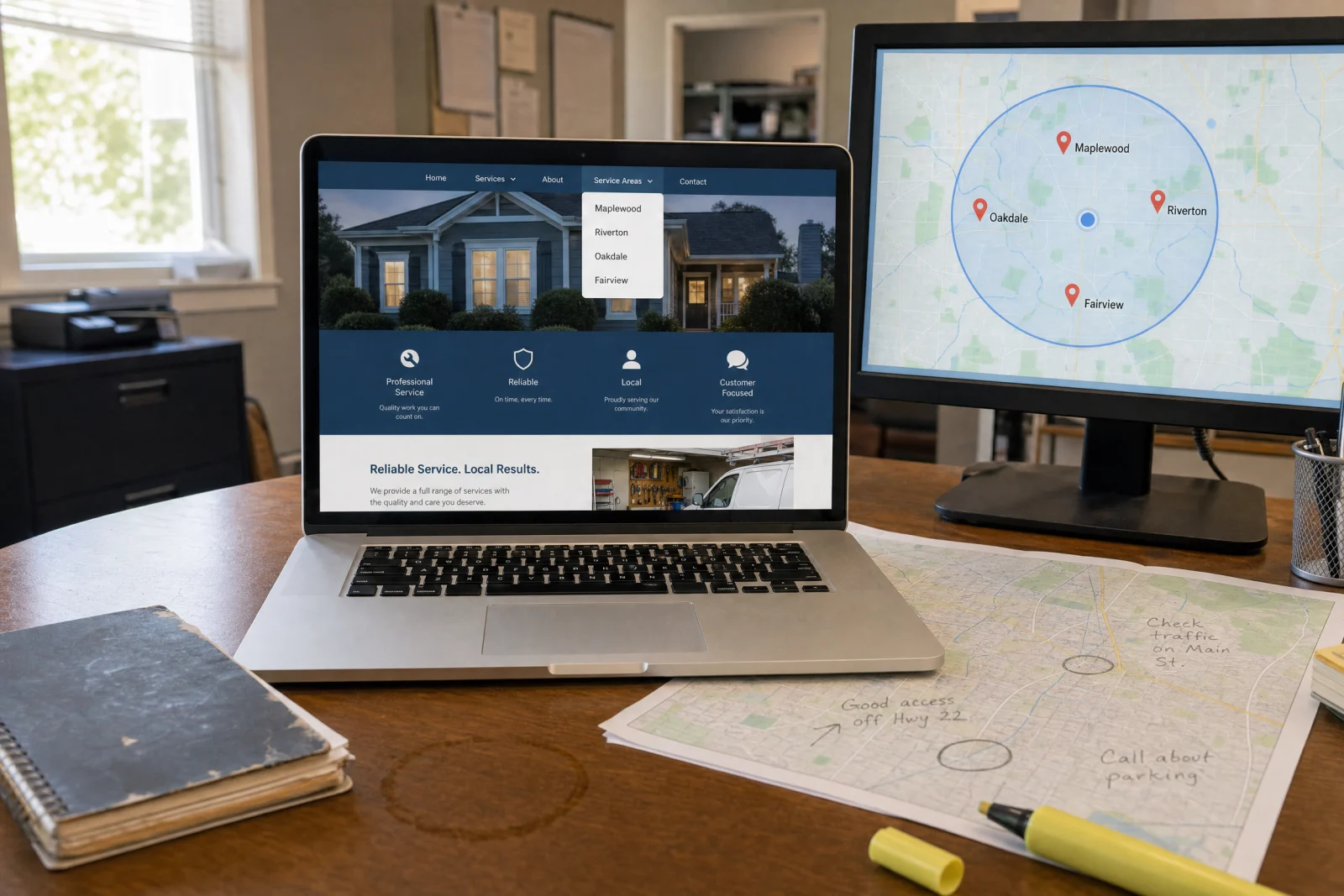
We started by mapping their actual service radius. They were driving to four towns regularly, but their online presence only reflected the one where their office was located. We adjusted their Google Business Profile service area to include all four, then built separate landing pages for each town. Not duplicate content—each page had unique details about the area, local landmarks, and the specific services people in that town requested most often.
The difference was immediate. Calls from the three underserved towns went from almost nothing to a steady flow. The landing pages ranked within a month because there was so little competition for hyper-local search terms like “house cleaning service in [specific town].” Most competitors were targeting the whole metro area with one generic page. We went narrow and owned it.
Google interprets service areas differently than physical locations. A physical location gets you a map pin and shows up in the local pack for searches near that address. A service area gets you visibility across a radius, but only if you define it correctly. Too broad and you dilute your relevance. Too narrow and you miss jobs you could easily take. The sweet spot is the area you can realistically serve within your standard response time, broken into distinct markets with their own landing pages.
This strategy works for any service business that travels to customers. You do not need to open a second office to rank in a second town. You need to tell Google you work there and prove it with location-specific content that matches what people in that area are searching for. If you are not sure how your own site stacks up, our free scorecard walks through the same checks we use for visibility and conversion optimization.
Audit Your Setup This Week—Here’s Exactly What to Check
If you are not getting calls from local searches, one of these three things is broken. First, search for your service plus “near me” from a phone while standing in a town you serve. If your Google Business Profile does not show up in the map results, your service area is too narrow or not set at all. Log into your profile, go to the service area settings, and add every town you actually drive to. Not the whole state— the realistic radius.
Second, search for your business name on Google and look at the address and phone number that appear in the knowledge panel. Then check Yelp, Facebook, and Yellowpages. If the details do not match exactly—same spelling, same format, same phone number—your citations are inconsistent and Google does not trust them. Pick the version that matches your Google Business Profile and update the rest to match.
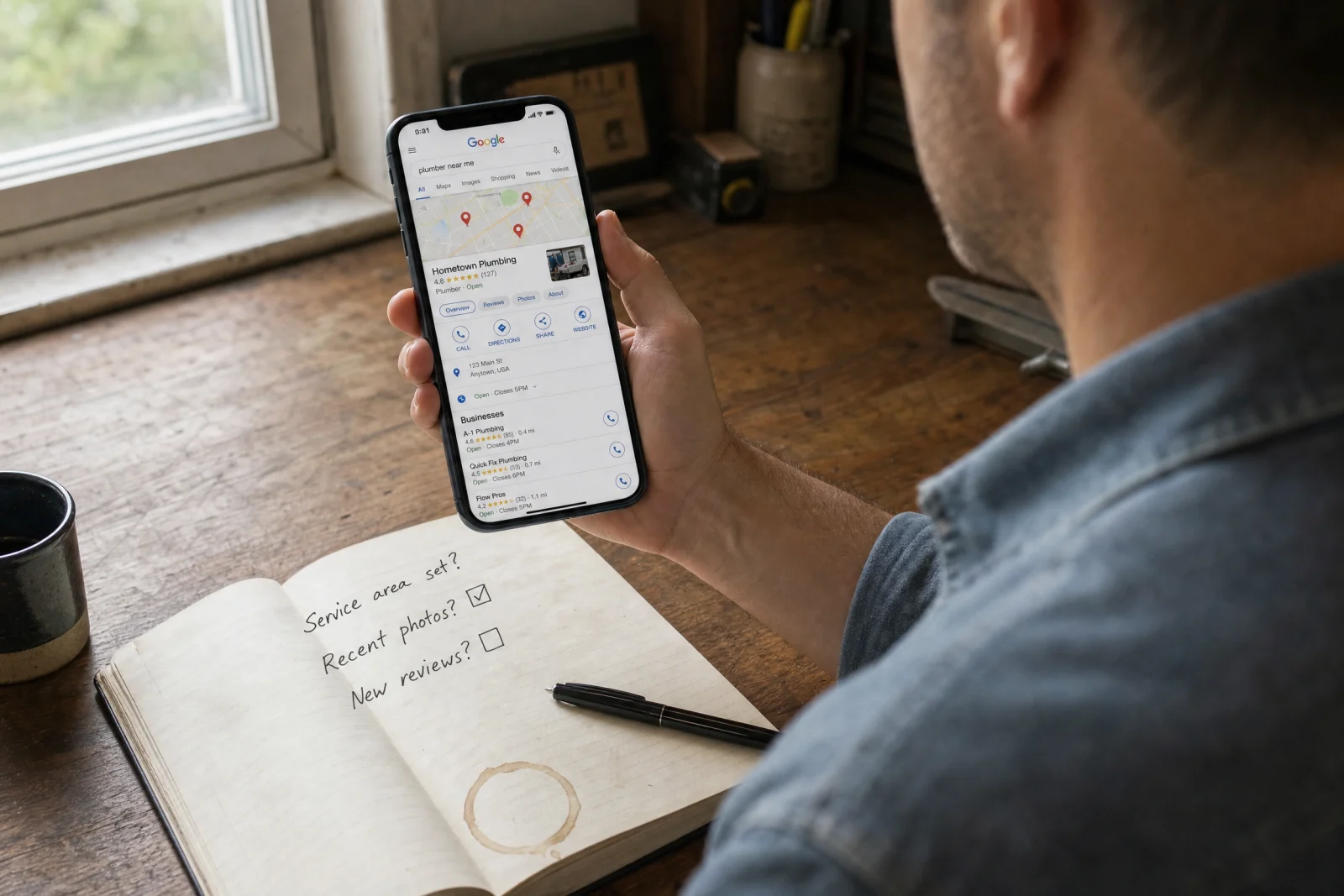
Third, open your Google Business Profile on a phone and scroll through it like a customer would. Are there recent photos from actual jobs? Is the Q&A section answered? Is your phone number visible without scrolling? If any of those are missing, you are losing calls to competitors who got the basics right.
Pick the one that is most likely broken in your account and fix it this week. Then measure calls for fourteen days. You will know within two weeks if it moved the needle. This systematic approach to your local SEO for service businesses setup eliminates guesswork and focuses on what actually drives results.
The One Thing That Ties All of This Together
That electrician who rebuilt his keywords around what customers actually said? He also fixed his service area, cleaned up his citations, and started asking for reviews with the text system. None of those changes worked in isolation. The service area brought visibility in new towns, but without the intent-driven keywords, the traffic did not convert. The reviews built trust, but without the accurate citations, Google did not show the profile in the first place.
Local SEO for service businesses is not a single tactic. It is a system where every piece supports the others. A great Google Business Profile does nothing if your citations are a mess. Perfect keywords do not matter if your service area is set wrong. Reviews help, but only after people can actually find you.
We have been building local SEO for service area businesses since 2018, and the pattern is always the same. The businesses that win are not the ones with the biggest budget or the fanciest website. Everything else is noise.
Start with the audit. Fix what is broken. Measure the calls. Then move to the next piece. The plumbing company that called us last spring is now getting forty-three calls per month from Google Maps instead of eight. The only thing that changed was the details. When you approach local SEO for service businesses as an integrated system rather than isolated tactics, the results compound quickly and the phone starts ringing with qualified leads ready to hire.