Getting pool builder lead generation right comes down to a few decisions most service-business owners rush — here is what actually matters.
A pool builder called us last spring after watching three months of zero website leads. The site looked great. Clean photos, modern layout, fast load times. But nobody was filling out the contact form, and the phone stayed quiet.
We pulled up the homepage and saw the problem immediately. Beautiful hero image of a finished pool at sunset. Navigation menu. A paragraph about craftsmanship and quality. Then nothing. No reason to act today. No reason to give up an email address. No next step except “Contact Us,” which is what people do when they are already sold, not when they are still deciding.
The builder had spent money on professional photography and a custom WordPress theme, but the site treated every visitor like they were ready to sign a contract. Most people looking at pool builders are months away from a decision. They want to see what is possible, get a sense of cost, and figure out if this company is real. A contact form asking for name, email, phone, address, and project details feels like a commitment when someone is still browsing.
We rebuilt the homepage with one goal: give people a reason to stick around and a way to stay connected without feeling like they were signing up for a sales call. Added a simple lead magnet above the fold—a PDF guide called “What Pool Owners Wish They Knew Before Breaking Ground.” Put the phone number in the header where a thumb could tap it on mobile. Moved the gallery higher so people saw real projects within one scroll.
The form submissions started the next week. Not a flood, but steady. The builder closed two jobs in the first month from leads who downloaded the guide, stayed on the email list, and reached out when they were ready to move forward.
The lesson was not about design. The site already looked professional. The fix was about meeting people where they are in the decision process and giving them a low-pressure way to engage. Most pool builder lead generation fails because the website assumes everyone is ready to buy today, when most people are still dreaming, budgeting, and comparing options for months before they ever pick up the phone.
For a broader baseline, Google’s SEO Starter Guide is a useful external reference for making helpful pages easier for people and search engines to understand.
The Gallery That Stops Browsers From Leaving Empty-Handed
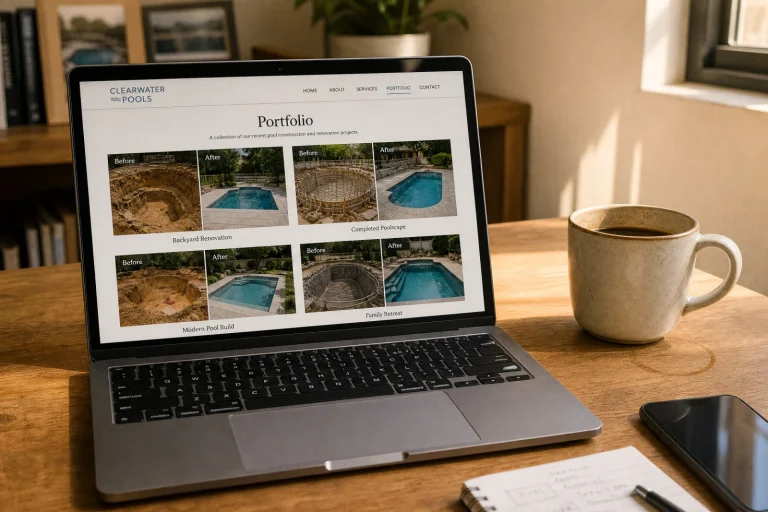
We rebuilt a portfolio section for a pool builder in 2024 that doubled their inquiry rate in six weeks. The old gallery was a grid of finished pools. Nice photos, but no context. No story. A wall of blue water that all started to look the same after the third or fourth image.
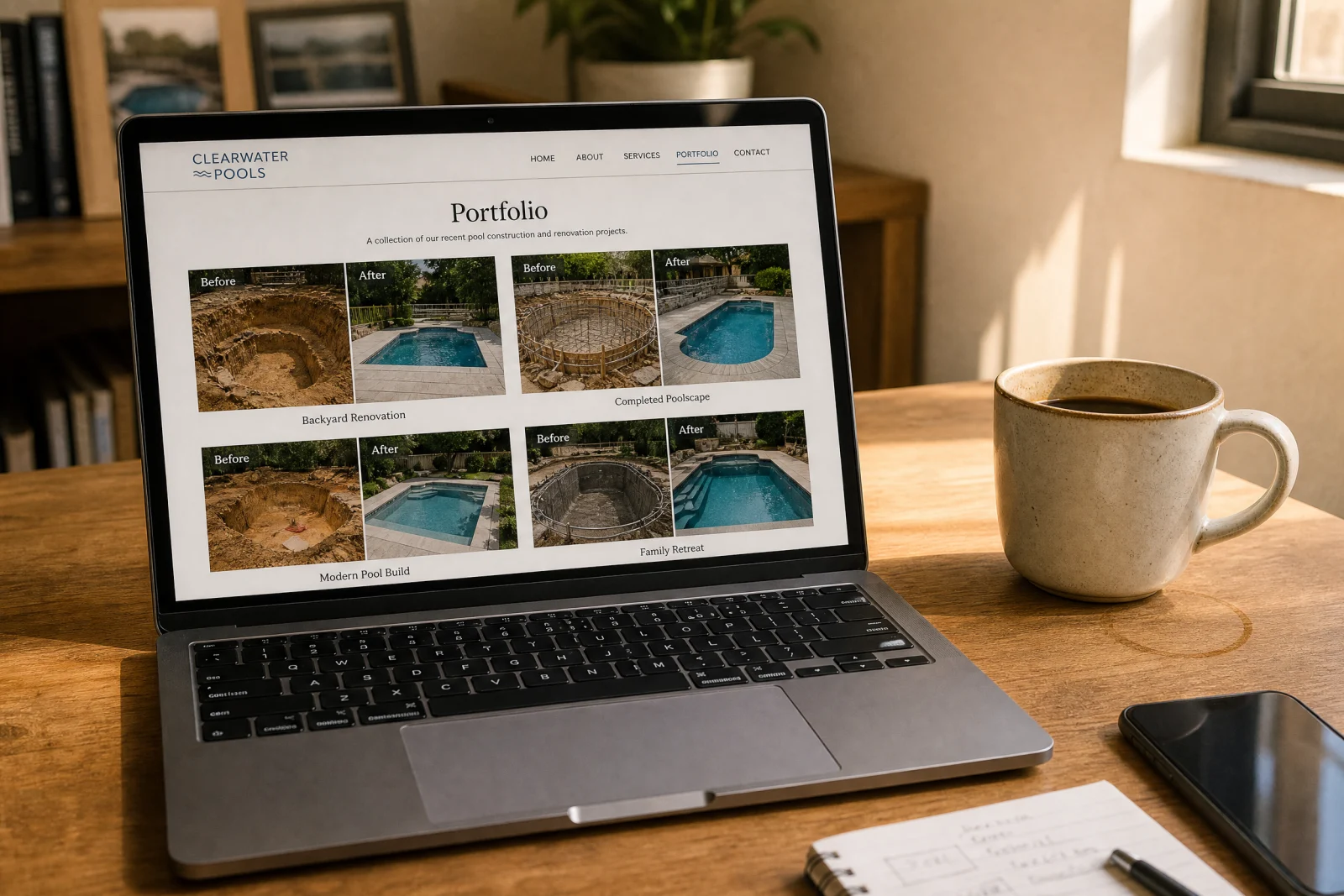
The new version told a story for every project. We kept the before photo—the dirt lot, the cracked concrete, the overgrown backyard—right next to the finished result. Added a two-sentence description for each build: the challenge, the solution, and one specific detail the homeowner requested. “This family wanted a shallow play area for their kids and a deeper section for lap swimming. We built a custom bench along the shallow end so parents could sit in the water and supervise.”
That specificity did two things. It showed the builder could handle custom requests, not cookie-cutter installs. And it gave potential customers language to describe what they wanted. People started filling out the contact form with detailed requests instead of vague inquiries. “We want something like the project you did in Clearwater with the built-in bench” is a much better lead than “interested in a pool.”
We also changed the photo angles. Stopped using only the wide aerial shots that make every pool look like a resort. Added close-ups of tile work, lighting fixtures, and custom water features. Showed the pool at different times of day—morning light, evening glow, underwater shots with the lights on. The variety kept people scrolling instead of bouncing after three identical images.
The other change was placement. We moved the gallery higher on the homepage and added a “Featured Projects” section that rotated three builds with full case studies. Each case study included the project timeline, the budget range (not exact numbers, but “mid-range custom build” or “luxury installation”), and a quote from the homeowner. That social proof mattered. People trust other customers more than they trust marketing copy.
The gallery became the main lead driver on the site. People spent more time on the page, clicked through more projects, and reached out with specific questions instead of tire-kicking inquiries. A portfolio is not proof you can do the work. It is a sales tool that shows people what is possible and gives them permission to ask for exactly what they want.
Capturing Leads When People Are Still Dreaming
Most pool builders skip lead magnets entirely or offer something nobody wants. A generic “Free Quote” button does not work when someone is six months away from breaking ground. They are not ready for a quote. They are ready for information.
The lead magnet that works best for pool builders is a maintenance checklist for new owners. It is specific, immediately useful, and positions the builder as someone who cares about what happens after the install. We have also seen success with a simple cost breakdown guide—”What Actually Drives Pool Construction Costs in Florida”—that gives people realistic budget expectations without requiring a sales call.
Avoid the temptation to offer a design consultation or a backyard assessment as your lead magnet. Those are sales calls disguised as free resources, and people can smell the difference. A real lead magnet is something they can download, read, and use without ever talking to you. The goal is to capture the email address and stay top of mind until they are ready to move forward.
Place the lead magnet in three spots: above the fold on the homepage, at the end of every blog post, and as an exit-intent popup when someone is about to leave the site. Make the form short. Name and email. That is it. Every additional field cuts your conversion rate. If you are not sure whether your own site is set up to capture and nurture leads effectively, a quick audit can show you exactly where visitors are dropping off.
We have watched pool builders overthink this and build elaborate quizzes or interactive design tools that take weeks to develop and nobody uses. A simple PDF guide beats a fancy tool every time. The easier it is to get, the more people will grab it.
The Follow-Up Rhythm That Actually Closes Deals
A plumbing client once let a Friday-night form submission sit until Monday morning. By the time they called back, the customer had already hired someone else. Speed matters, especially in service businesses where the job often goes to whoever answers first.

Pool construction is different. The sales cycle is longer. But the principle is the same. When someone fills out a contact form or downloads a lead magnet, they are thinking about you right now. If you wait three days to follow up, they have moved on to the next builder on their list.
Here is what happens after someone submits a form on a pool builder site that actually converts. First touch is immediate—an automated email that confirms we received the inquiry and sets expectations for when they will hear from us. That email includes a link to the portfolio, a few recent reviews, and a direct phone number in case they want to talk sooner. It is not a sales pitch. It is a reassurance that a real person will follow up.
Second touch is within 24 hours—a personal email or phone call from the builder. Not a generic “thanks for reaching out” message. A real response that references what they asked about and offers a next step, whether that is scheduling a consultation or sending over a ballpark budget range. According to the FTC, transparency in follow-up communication builds trust, especially in high-stakes purchases like pool construction.
Third touch is three days later if they have not responded. A short email checking in, offering to answer any questions, and sharing a link to a recent project similar to what they described. No pressure. staying present.
The rhythm matters as much as the speed. Too many follow-ups feel desperate. Too few and you lose the lead to someone who stayed in touch. We have found that three touches over the first week, then one every two weeks after that, keeps the builder top of mind without crossing into spam territory. The goal is not to close the deal in the first email. The goal is to still be in the conversation when they are ready to move forward.
Why Reviews Matter More Than You Think (And How to Get Them Without Cringe)
Reviews are the new sales team. A pool builder with 40 five-star Google reviews and detailed customer stories does not need to convince anyone they do good work. The reviews do that for them. According to the Small Business Administration, online reviews are one of the most influential factors in local purchasing decisions.
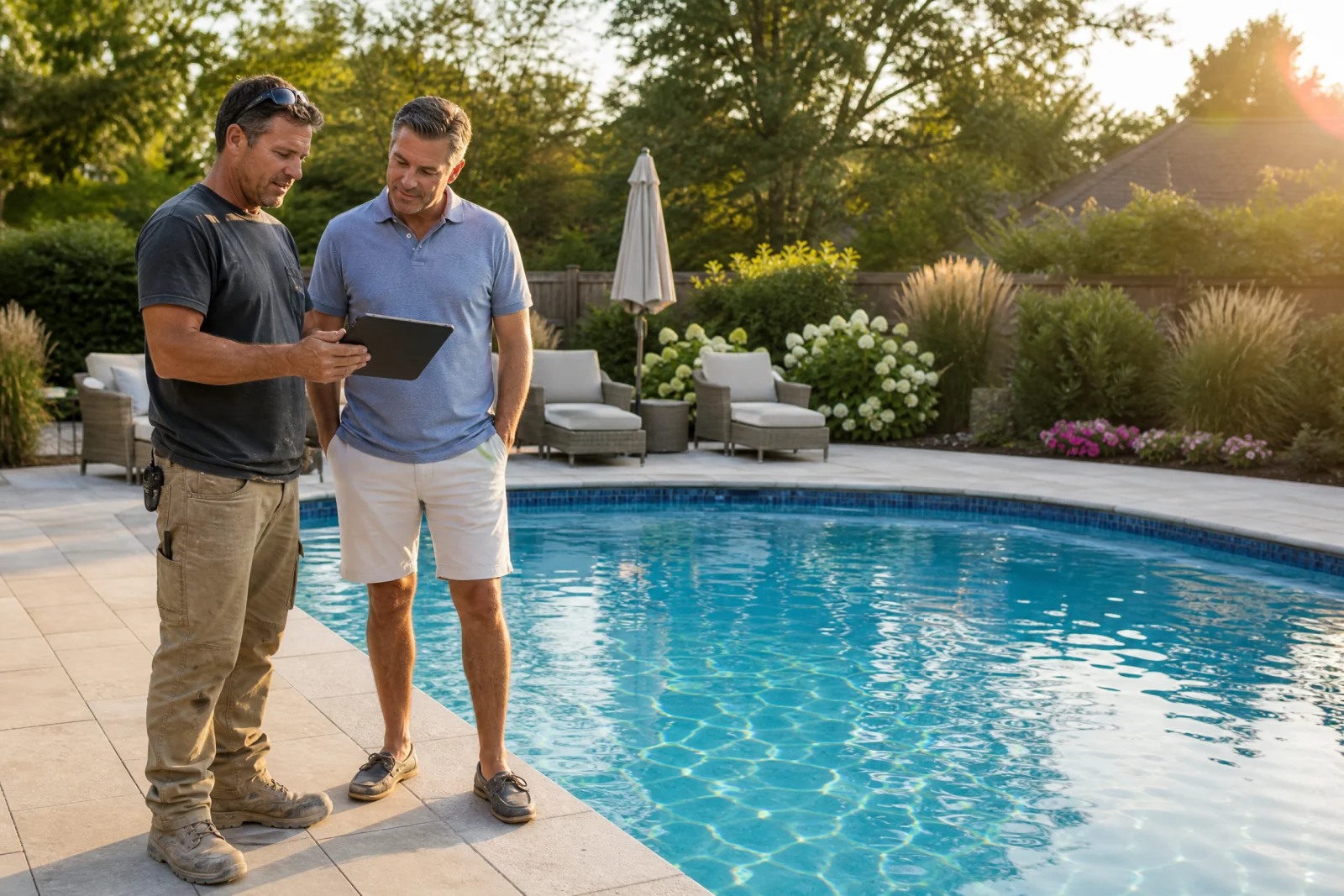
The problem is most builders wait until the job is done, then send an awkward email asking for a review. By then the customer has moved on. The excitement is gone. The request feels like homework.
The moment to ask is during the final walkthrough, right after the customer sees the finished pool for the first time. That is when they are happiest. That is when they are already telling you how much they love it. We have watched builders hand customers a tablet at that exact moment and say, “If you are happy with how this turned out, would you mind leaving us a quick review while we are standing here?” Most people say yes.
The other tactic that works is offering a small incentive that does not feel like a bribe. A couple of weeks of free maintenance or a discounted first cleaning in exchange for a review. People who spent $60,000 on a pool are not motivated by a $20 gift card, but they do appreciate a gesture that shows you value their feedback.
Make it easy. Send a direct link to your Google Business Profile review page, not instructions on how to find it. The fewer steps between the ask and the review, the more likely it happens. And when you get a great review, respond to it publicly. Thank the customer by name, mention a specific detail from their project, and reinforce that you care about the outcome. Future customers read those responses.
Why Reddit Became a Pool Builder Lead Source in 2026
Nobody saw this coming, but Reddit is now the fifth most visible site in US search results, and pool builders are starting to notice. A study of 150,000 AI citations found Reddit was referenced more than Wikipedia or YouTube. When someone searches “best pool builder near me” or “how much does a custom pool cost,” Reddit threads show up in the top five results.
The leads are different. Reddit users are not ready to buy. They are researching, asking questions, and looking for honest opinions from people who are not trying to sell them something. But that makes them perfect for the top of the funnel. A pool builder who shows up in those threads with helpful, non-salesy answers builds trust before the customer ever visits their website.
We have also seen pool builders experiment with Reddit Ads, which cost around $3 per click in early 2026. The leads are cheaper than Google Ads, but the intent is lower. Someone clicking a Reddit ad is not calling for a quote that afternoon. They are browsing. The trick is treating Reddit traffic like lead magnet traffic—capture the email, stay in touch, and nurture them until they are ready to move forward.
The other advantage is community credibility. A builder who participates in local subreddits, answers questions about pool maintenance, and shares project photos without pushing for sales builds a reputation that carries weight. When someone in that community is ready to hire a builder, they remember the person who helped them six months ago.
Yard Signs, Referral Kickbacks, and Pool Builder Lead Generation Tactics Most Builders Miss
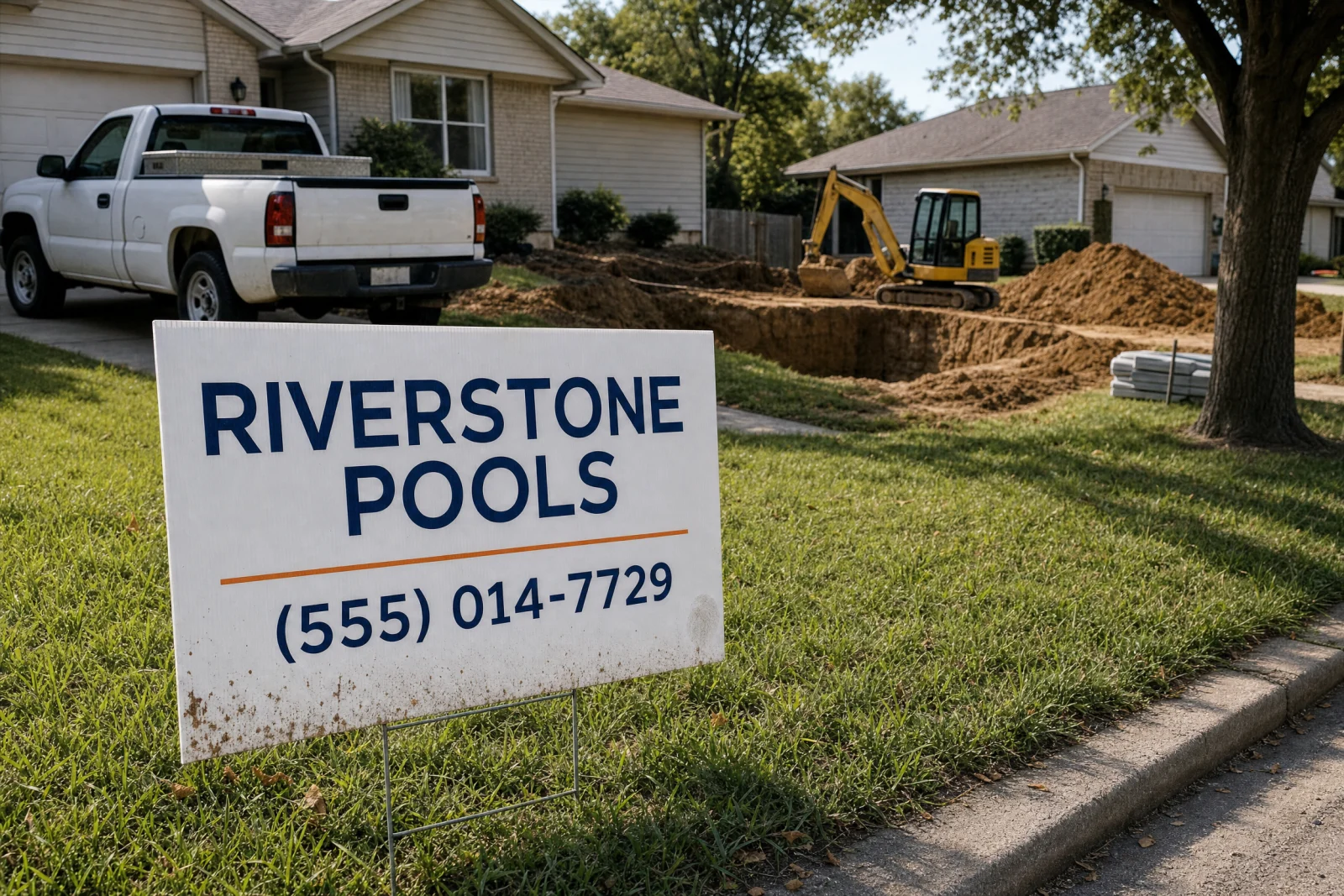
The best pool builder lead generation tactics are not always digital. Yard signs are free and most builders forget to use them. Every active job site is a billboard for the neighborhood. People see the construction, get curious, and look up the company. A simple sign with the business name, phone number, and website is enough.
Referral partnerships with pool builders also work, especially for service companies looking to break into new construction. One pool service owner described paying builders a few weeks of free service to the customer while charging the builder for that time. The builder offers it as a perk to close the sale, and the service company gets introduced to 30-plus new customers a year per builder. The marketing cost is zero beyond a few lunches and the time to build the relationship.
Client referral programs are effective when the incentive feels generous. A discount on future service or a free maintenance check in exchange for a referral works because pool owners know other pool owners. Wealthy neighborhoods cluster. One happy customer can lead to three more jobs on the same street.
The mistake is treating referrals as an afterthought. Build the ask into the process. At project completion, during the final walkthrough, or in the follow-up email a month later. Make it easy. Give them a referral link or a simple way to forward your contact info. Most people are happy to refer a good builder, but they will not do it unless you remind them.
Start Your Lead Generation Audit This Week
Pull up your website and scroll through the homepage like a customer who has never heard of you. Do you see a reason to act today, or a contact form buried below the fold? Do you have a lead magnet that gives people a way to stay connected without committing to a sales call? Is your portfolio telling stories, or showing pictures?
Pick one thing to fix this week. If your gallery is a grid of identical pool shots, add before-and-after photos and project descriptions. If you do not have a lead magnet, create a simple PDF guide and put it above the fold. If your follow-up process is slow, set up an automated email that fires the second someone submits a form.
The pool construction season is short in most of the country, and the builders who capture leads early are the ones who stay booked through summer. Waiting until March to fix your pool builder lead generation strategy means losing two months of prime inquiry traffic to competitors who figured this out in January. Testing different pool builder lead generation options now—whether that means improving your website, launching a lead magnet, or setting up a referral program—gives you time to see what works before peak season hits. The site that looks professional but feels empty is leaving jobs on the table. Fix it now.