Answering services for contractors is the problem this guide helps a business owner diagnose before making the wrong next move. When your business depends on capturing every inbound call, having reliable answering services for contractors becomes the difference between growth and watching opportunities slip away to competitors who simply picked up the phone first.
The $500 Call You’re Probably Missing Right Now
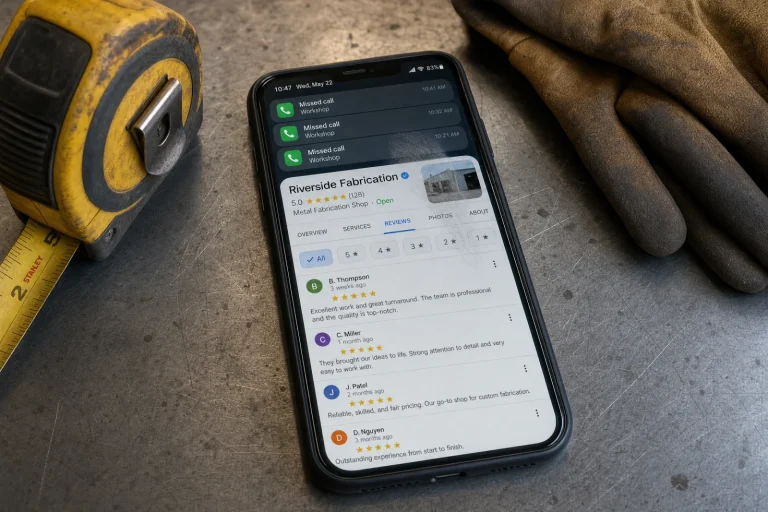
A roofer we work with missed a call last August while he was finishing a tear-off in Clearwater. The homeowner left no voicemail. By the time he saw the missed call two hours later and called back, they had already booked with someone else. That job was worth about $8,500. The homeowner mentioned to the neighbor who referred them that the roofer never picked up. The neighbor stopped referring. That is three more jobs he never saw, all because he was on a ladder when the phone rang.
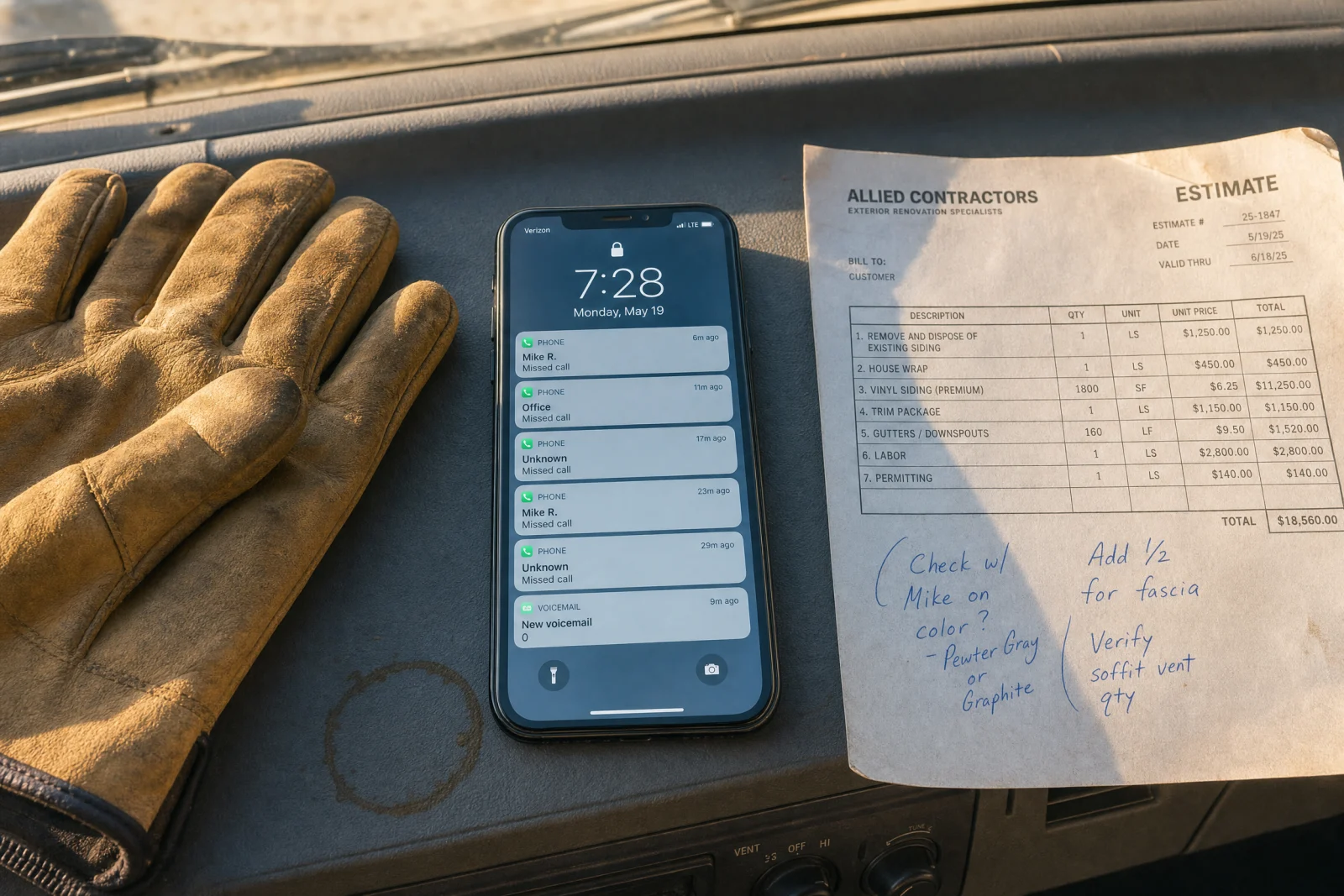
The math gets worse when you account for seasonality. A plumber in Tampa told us he gets most of his emergency calls between May and September when AC units fail and water heaters give out in the heat. Missing one call during peak season does not cost him that job. It costs him the chance to get in front of a homeowner who will need service again, who will tell their friends, who will leave a review. One missed call in July can quietly cost $2,000 in work by December.
We pulled call data for an HVAC company we built a site for back in 2022. They were getting about forty inbound calls a week during summer. Sixty-two percent went to voicemail because the owner and his two techs were all on jobs. Of those voicemail calls, seventy-eight percent never left a message. They hung up and called the next company. That HVAC shop was losing twenty calls a week to dead air. If even half of those calls turned into jobs, and the average job was $1,200, they were leaving $57,600 on the table every summer.
The issue is not that contractors are lazy or bad at business. The issue is that the moment someone calls is the moment they have decided to solve a problem. They are hot, or their basement is flooding, or they have a job site that needs electrical work by Monday. If you do not pick up, they move on. The job goes to whoever answers first, not whoever is best.
That is where answering services for contractors come in. Not as a luxury, not as something to think about when you scale. As the difference between capturing intent and watching it walk to a competitor.
Why Your Current Setup Is Costing You More Than You Think
Most contractors we talk to are running one of three systems. The first is no system. The phone rings, and if they are free, they answer. If not, it goes to voicemail. The second is handing the phone to a spouse or office person who is also doing invoices, ordering materials, and trying to keep the schedule straight. The third is Google Voice or a second cell phone that they check when they remember.
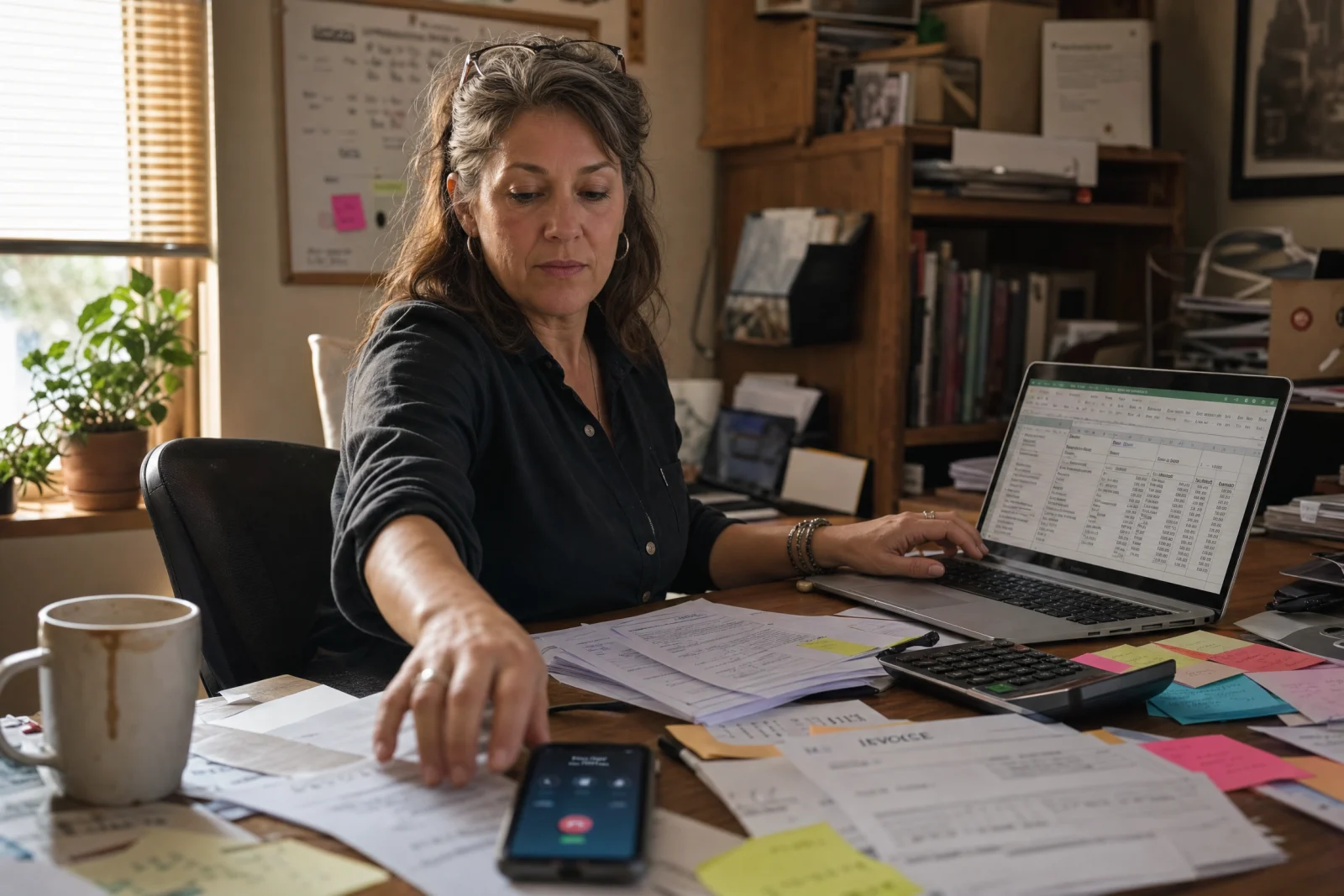
All three cost more than they save. The no-system approach loses calls outright. The spouse-or-office-person setup burns out the one person holding everything together and still misses calls when they are busy. The Google Voice plan creates a black hole where calls sit unheard for hours. We watched an electrician lose a commercial bid because the property manager called his Google Voice line on a Friday afternoon and never got a callback until Monday. The job was already awarded.
Seasonality makes it worse. A landscaper can maybe get away with missed calls in February. In April, when every homeowner wants mulch and cleanup before summer, a missed call is a missed paycheck. You cannot scale a business on a system that only works when you are not busy.
What Actually Matters When Choosing Answering Services for Contractors
A contractor called us last year asking which answering service to use. He had been comparing prices and found one for $25 a month. He was ready to sign up. We asked him what happened when someone called after hours with an emergency. He said he did not know. The cheap service did not say.
That is when he realized price was the wrong place to start. What he actually needed was someone who could tell the difference between a spam call and a homeowner with a busted sewer line at 11pm. He needed a service that could take a message, sure, but also route an emergency to his cell and log a non-urgent call into his CRM so he could follow up in the morning. The $25 service could not do any of that. It took messages. Within two months, he booked three jobs that came in after 7pm. Those jobs paid for a year of the service.
The three things that actually matter are call quality, integration, and speed. Call quality means the person answering sounds like they work for you, knows enough about your trade to ask the right questions, and does not make the customer repeat themselves three times. Integration means the call details go straight into whatever system you use to track jobs, whether that is Jobber or a spreadsheet. Speed means the callback happens fast enough that the customer does not move on.
Everything else is noise. If a service cannot do those three things, the price does not matter. Most of them are fine. A few are great. Two stand out.
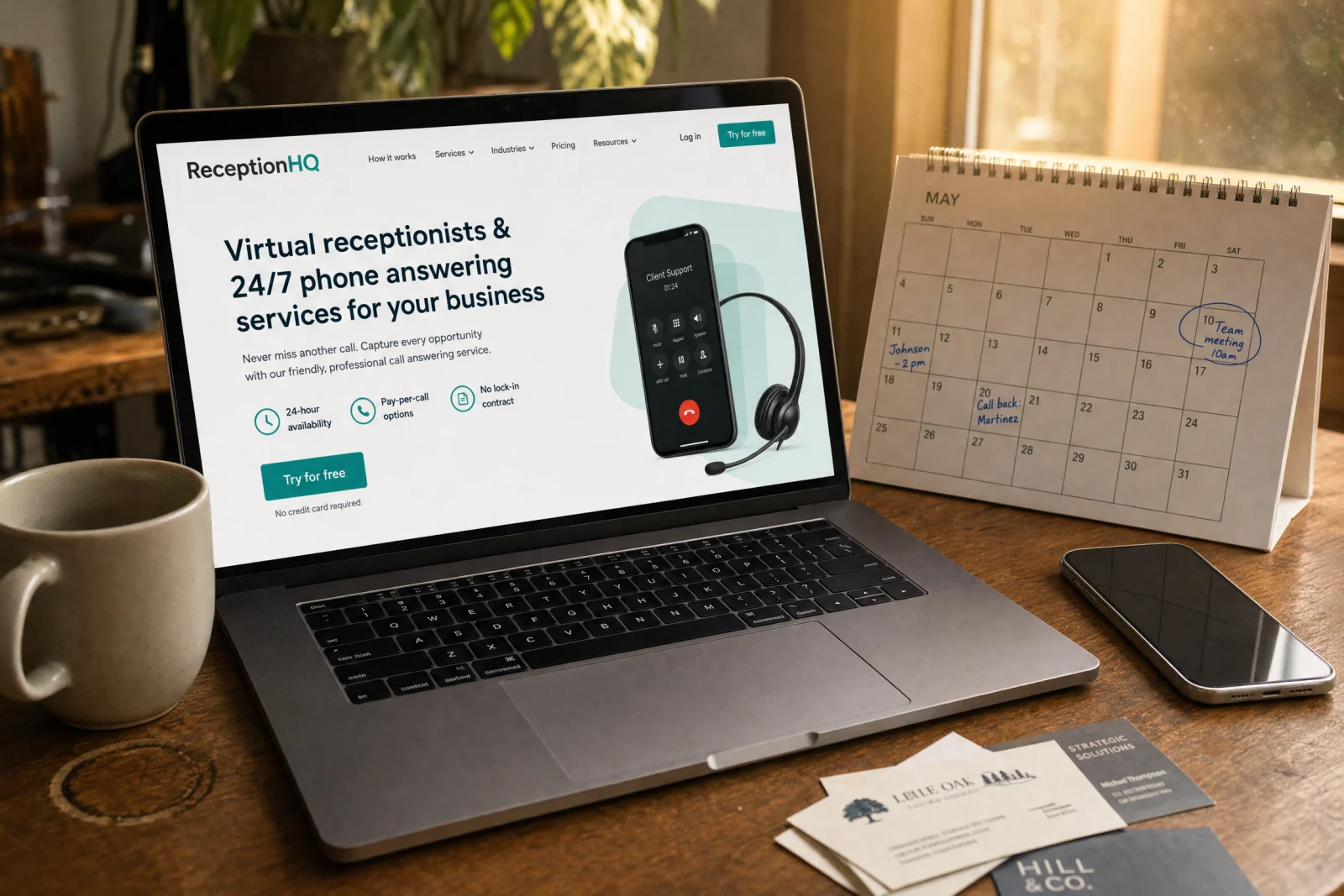
The first is ReceptionHQ. They have US-based receptionists across four states who answer calls during core business hours, with 24/7 coverage available if you need it. Spanish bilingual service is included with every account at no extra cost. The pricing starts at $35 a month for the ReceptionistPlus plan, which is the one most contractors actually use. Calls get answered by a real person who follows a script you set up, and they can route emergencies, take messages, or schedule appointments depending on what you need. A construction company owner told us they tried three other services before ReceptionHQ and none of them came close. The difference was how the receptionists handled the calls. They sounded like they worked for the company, not like they were reading from a card.
ReceptionHQ also offers a seven-day free trial with no credit card required. You can test it, see how they handle your calls, and bail if it does not work. We have seen contractors use the trial to compare it against their current setup and realize how many calls they were losing.
The second is Quo with Sona. This one is AI, not human, which makes some contractors nervous. But the AI is good. Plans start around $25 a month for fifty calls, with overage calls running roughly $0.45 to $1.00 each depending on the plan. Calls under fifteen seconds do not count, so spam and wrong numbers do not eat into your limit. The first ten calls are free. Sona integrates with Jobber, HubSpot, Salesforce, and a handful of other CRMs, so call details flow straight into your system without you touching anything. A contractor using Sona told us he never worries about missing a call anymore. It picks up 24/7, sounds professional, and routes emergencies to his cell while logging everything else for morning follow-up.
For small or seasonal operations, ReceptionHQ makes more sense. The human touch matters when you are building trust with a new customer. For growing crews that need something scalable and integrated, Sona is hard to beat.
The other five services on this list do fine work. Ruby has great receptionists but costs $245 a month for fifty minutes and charges $5.40 per minute after that, which gets expensive fast. AnswerConnect starts at $350 for two hundred minutes with no option to go lower. Specialty Answering Service is $44 a month plus $1.54 per minute, which works if your call volume is low but gets pricey if it is not. Jobber and Housecall Pro both offer AI receptionists as add-ons, but you are already paying for their platform, and the add-on costs another $99 to $200 a month depending on the plan. They work if you are already all-in on those platforms. Otherwise, you are paying for features you do not need to get the answering service.
How to Actually Get Your Team to Use It
An HVAC company we built a site for signed up for an answering service in 2023. The owner was excited. He told his two techs the new system would handle all the inbound calls so they could stay focused on the job. The techs kept answering their cell phones anyway. After two weeks, the owner realized the service was taking messages, but his guys were still fielding calls on-site and forgetting to log them. The system was running parallel to the old habit, not replacing it.
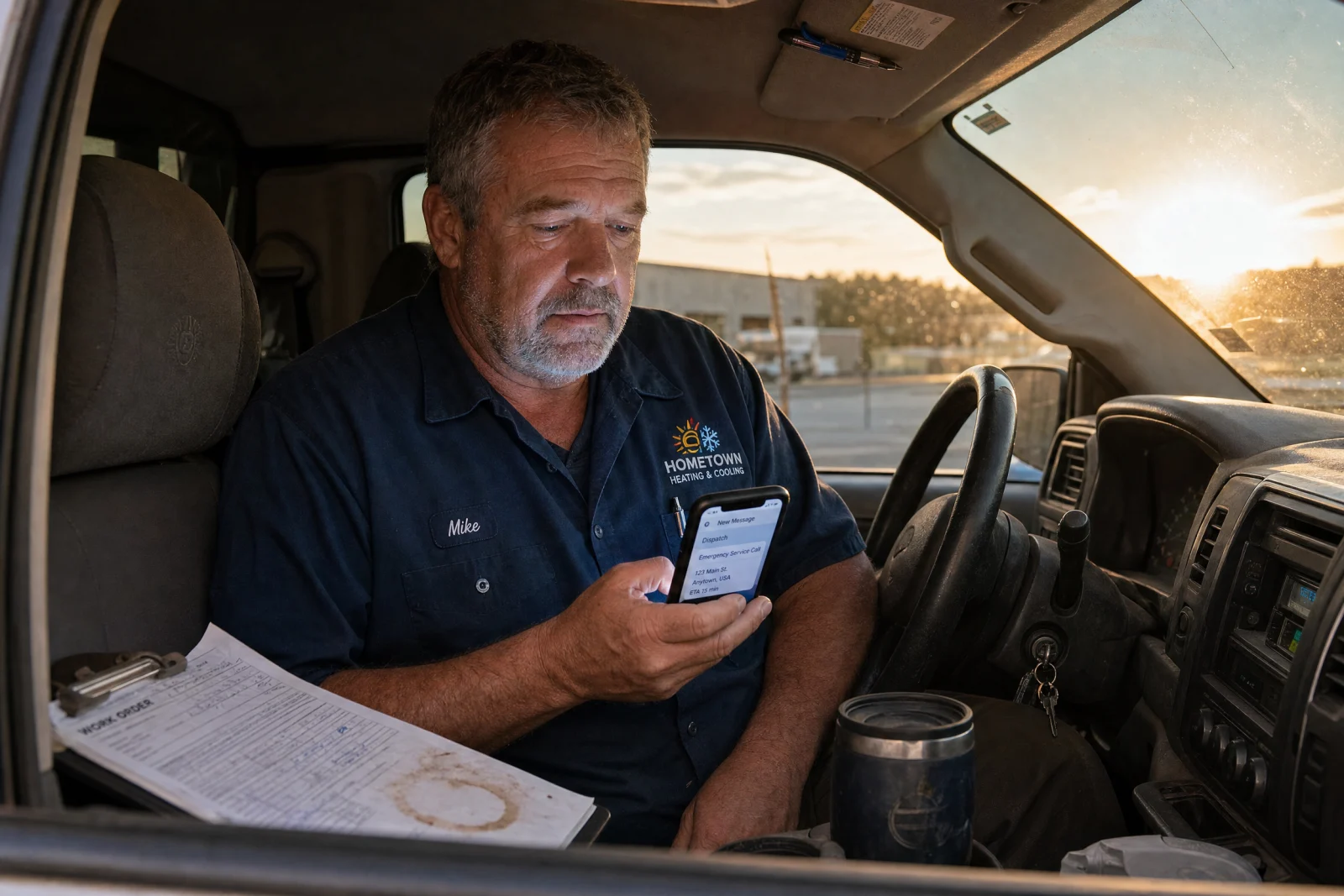
He fixed it by doing three things. First, he stopped giving out the techs’ cell numbers to customers. Every customer got the main line, which rang through to the answering service. Second, he showed the techs the call log from the service and walked through how many calls were coming in after hours that they would have missed entirely. That built trust. Third, he had the service send him a text every time a call came in, so he could see in real time that it was working. Once the techs saw that no calls were falling through the cracks, they stopped checking their phones every ten minutes.
The turning point was a Friday night call. A homeowner’s AC went out at 9pm. The answering service took the call, marked it as an emergency, and texted the owner. He sent one of his techs out that night. The homeowner was so relieved they left a five-star review and referred two neighbors. The tech saw that the system worked. After that, he stopped answering his cell on jobs.
Getting your team to use a new system is not about forcing it. It is about proving it works and removing the old path so they do not have a choice. We help service businesses set up these systems alongside website optimization and lead capture tools so nothing falls through the cracks between the first call and the booked job.
The One Thing to Do Before You Sign Up Anywhere
Before you pick a service, pull your call log from the last thirty days. If you do not have a log, check your cell phone. Count how many calls you missed. Count how many came in after 5pm. Count how many were on weekends. Write down what those calls were about if you can remember, or call a few back and ask.
That thirty-day snapshot will tell you what you actually need. If most of your missed calls are after hours, you need 24/7 coverage. If they are all during the day, you need someone to answer while you are on jobs. If half of them are spam, you need a service that screens calls. Matching your actual call pattern to a service’s actual capabilities is the difference between paying for something that works and paying for something that sits idle while you keep missing calls.
Once you know your pattern, sign up for a free trial. ReceptionHQ offers seven days with no credit card. Sona gives you ten free calls. Test it with real calls, not hypothetical ones. See how they handle an emergency. See how fast the message gets to you. See if the details are accurate enough that you can call the customer back without asking them to repeat everything.
If the service passes that test, you found the one. If it does not, try the next one. The right answering services for contractors are not about the monthly fee. The real cost of getting this wrong is the $8,500 roofing job that goes to someone else because you were on a ladder when the phone rang. If you are not sure how many leads you are actually losing to missed calls or slow follow-up, our missed-lead system review walks through the same call-tracking and follow-up checks we use with service businesses.