
If you run a service business, the smartest way to get your week back is to automate business operations — the follow-ups, the missed calls, the scheduling, the “did we ever send that quote?” When you do, you hand that repetitive work to systems that run on their own, so you get hours back and stop losing leads you already paid to get.
It’s not about replacing your people. It’s about taking the busywork off their plate so they can do the work that actually needs a human.
Here’s what that looks like in practice, which parts to automate first, and how to get started without turning your whole business upside down.
What “automating your operations” actually means
Forget the robots-taking-over framing. For a normal service business, automation is boring in the best way. It’s a set of small systems that handle a task the same way every time, without anyone remembering to do it.
A few plain examples:
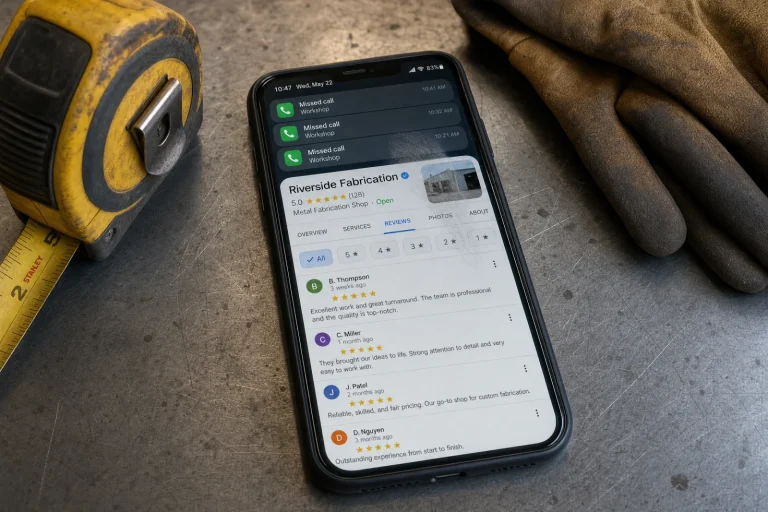
- A call comes in while your crew is on a roof. Nobody can grab it. A missed-call text goes out on its own: “Sorry we missed you — what can we help with?” The caller texts back instead of dialing your competitor.
- A new lead fills out your form at 9PM. They get a real reply in seconds, not the next morning when you’re back at your desk.
- A quote goes out. If the customer doesn’t respond, they get a friendly nudge two days later — and again four days after that — without you keeping a mental list.
None of that is flashy. It’s the kind of thing that should already be happening in your business and probably isn’t, because you’re busy running the business.
AI fits in here too, but only where it earns its place — answering after-hours questions, qualifying a lead before it reaches you. It’s a tool in the kit, not the headline.
The real cost of running everything by hand
Doing it all manually feels free. It isn’t. You’re paying for it in the most expensive currency you have, which is your time and your team’s attention.
A 2024 Slack survey found that small-business owners lose an average of 96 minutes a day to wasted, low-value time. That’s roughly 3 weeks a year. For most owners I talk to, a big chunk of that is repetitive admin that a system could handle.
Then there’s the leads you never see. When a call goes to voicemail, most people don’t leave a message — they call the next business on the list. A slow reply works the same way. Studies on lead response have shown for years (the Lead Response Management Study being the one everyone cites) that reaching a new lead within five minutes beats waiting even half an hour, by a wide margin. The lead is comparing you to two other companies, and the fastest answer usually wins.
So the cost of “we’ll get to it” isn’t zero. It’s the owner doing $20-an-hour admin instead of $200-an-hour work, and it’s the jobs that quietly went to someone who picked up first.
What to automate first
You don’t automate business operations all at once. That’s how people burn out on it and quit. You start with the leak that’s costing you the most, get it working, then move to the next one. Here’s the order I’d usually go in for a service business.
Answer every lead fast

This is almost always the highest-leverage fix. Two pieces work together: missed-call text-back so no call goes cold, and an instant reply on every web form and message. The goal is simple — nobody who tries to reach you waits more than a minute or two for a response, even at night or on a Saturday. That’s what missed-call text-back is built for.
Follow up without having to remember
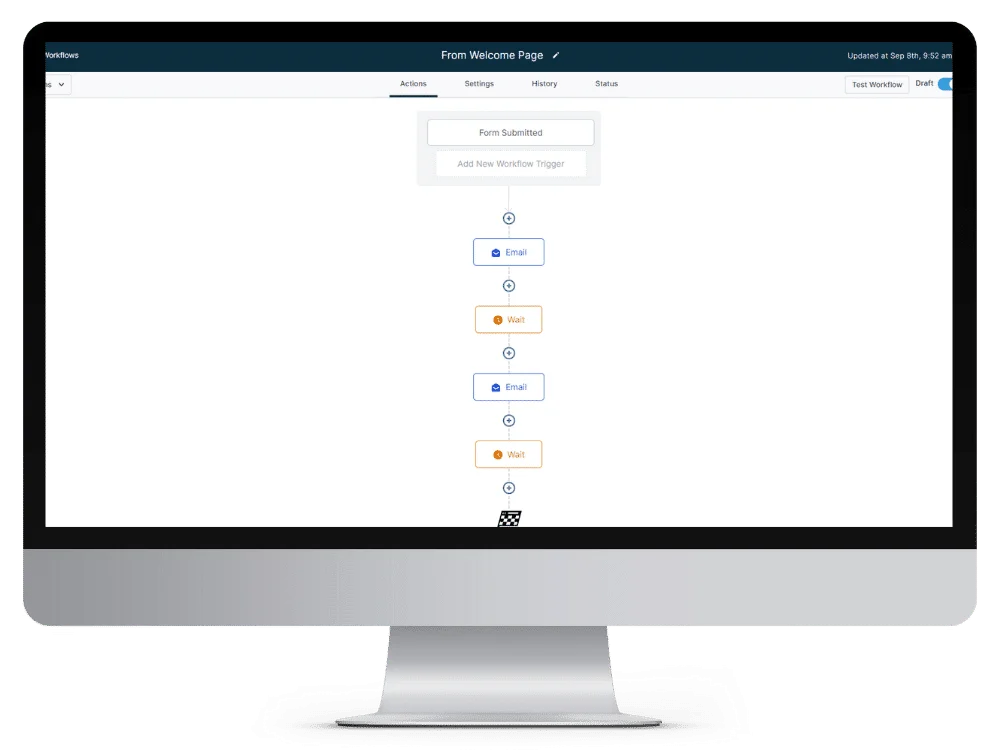
Most jobs aren’t won on the first contact. They’re won on the third or fourth. The problem is no human reliably follows up four times while also running the work. A simple follow-up sequence does it for you — a set of texts and emails that go out on a schedule until the customer books or tells you they’re out. You set it once; it runs forever.
Let people book themselves

Phone tag is a leak. Every back-and-forth to find a time is a chance for the customer to cool off or go elsewhere. An online booking link that shows your real availability turns “let me check and call you back” into a confirmed appointment, with a reminder the day before so they actually show.
Ask for reviews on autopilot
Reviews are how local customers decide who to trust, and most happy customers will leave one if you ask at the right moment. The trick is asking every time, which no one does by hand. Review automation sends the request after the job’s done and routes it to Google, so your reputation builds itself instead of stalling.
Where AI actually fits — and where it doesn’t

There’s a lot of noise right now about AI running your whole business. Be careful with it. The useful version is narrow and specific.
An AI receptionist can answer your phone after hours, handle the common questions, and book the appointment — so a 7PM caller becomes a Tuesday job instead of a voicemail. An AI chatbot on your site can qualify a lead before it ever reaches a person. Those are real wins.
What AI shouldn’t do is replace the people who make your business yours. It frees up the 10 hours a week your team spends on follow-ups and phone tag. It doesn’t take their jobs. Any vendor selling you “agents that run the whole thing” is selling a story. The boring, specific version is the one that actually works.
How to automate business operations without breaking what works
The fastest way to wreck a good business is to automate a process you don’t understand yet. So the order matters.
- Map what actually happens. Write down how a lead becomes a paying customer today, step by step. You’ll spot the leaks fast — usually it’s the handoffs.
- Pick the one that’s costing you most. For most service businesses, that’s speed-to-lead. Fix one thing and get it working before you touch anything else.
- Keep a human in the loop at first. Let the system draft the text or flag the lead; you approve it for a week until you trust it. Then let it run.
- Build on what you already use. You probably don’t need new software. You need the tools you have to talk to each other.
If mapping all that feels like one more job you don’t have time for, that’s exactly what an automation audit is for. We spend a day looking at how your business actually runs and hand you a plain report: what to automate, what to leave alone, and what it’ll save you. You can build it yourself from there, or hand it to us.
How we think about it at Blue Coast
I’ll be straight about why I’d trust us with this. We run our own shop on the same automation we sell — the follow-ups, the booking, the reviews, all of it. Most agencies can’t say that honestly. We can.
We’ve spent 8 years helping 50+ businesses automate business operations, and the systems we build stay built. We’re not here to hand you a strategy deck and disappear, and we’re not trying to lock you into a platform you can’t leave. When we set something up, we teach you and your team how to run it — guides, videos, the works — so you understand your own business, not just that it works. That’s the whole idea behind Business Autopilot: build every system the business needs, then leave you in control of it.
What to do next
You don’t have to automate your whole operation this month. You have to stop the biggest leak. For most owners, that’s the lead that called once and never heard back.
Start there. And if you want to see exactly where your time and leads are leaking, take the free Automation Scorecard. Five questions, about a minute, and you’ll know your biggest bottleneck and the two fixes worth making first. If it makes sense, you can book a free audit right from your results.